




Aimee K
For those of my readers who don’t recall, I published a post last year on fairy tales, fables and legends.
I cannot prove this, but I feel it emphatically deep in my soul: the esoteric truths that are preserved in Fairy Tales were reestablished by Mother Mary who would have been living as a grandmother to Mary Magdalene’s children in France. The stories have such intrinsic truth and fundamental goodness that they were naturally passed down through generations of children who became mothers and re-told them to their own children — imbued with such power that they endured and spread throughout Europe despite centuries of Dark Ages.


Fundamental Truths in Fairy Tales, Fables, and Legends
We do not read fairy tales to children so that they learn that dragons exist. Children already know that dragons exist. We read them fairy tales so that they can learn dragons can be slain.
Fundamental Truths in Fairy Tales, Fables, and Legends
We do not read fairy tales to children so that they learn that dragons exist. Children already know that dragons exist. We read them fairy tales so that they can learn dragons can be slain.
Where am I going with this? Well, receiving the covenant to being gathered is connected through being able to abide the covenant.
It is not enough to receive my covenant, but you must also abide it. And all who abide it, whether on this land or any other land, will be mine, and I will watch over them and protect them in the day of harvest, and gather them in as a hen gathers her chicks under her wings. I will number you among the remnant of Jacob, no longer outcasts, and you will inherit the promises of Israel. You shall be my people and I will be your God, and the sword will not devour you. And unto those who will receive will more be given, until they know the mysteries of God in full.
How do we abide the covenant?
There’s a FABLE that give us more insight!
Please don’t skip over this because you think you already know it.

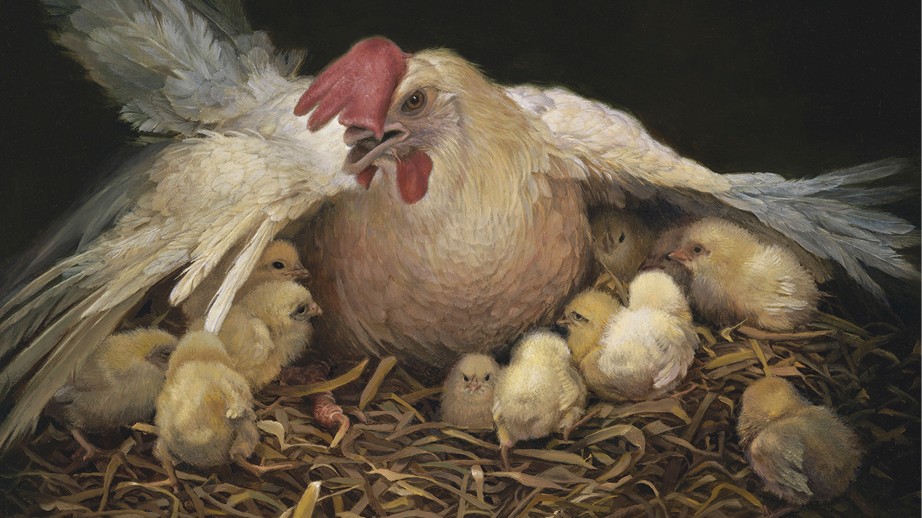
The Little Red Hen
A Little Red Hen lived in a barnyard. She spent almost all of her time walking about the barnyard in her picketty-pecketty fashion, scratching everywhere for worms.
She dearly loved fat, delicious worms and felt they were absolutely necessary to the health of her children. As often as she found a worm she would call “Chuck-chuck-chuck!” to her chickies.
When they were gathered about her, she would distribute choice morsels of her tid-bit. A busy little body was she!
A cat usually napped lazily in the barn door, not even bothering herself to scare the rat who ran here and there as he pleased. And as for the pig who lived in the sty – he did not care what happened so long as he could eat and grow fat.
One day the Little Red Hen found a Seed. It was a Wheat Seed, but the Little Red Hen was so accustomed to bugs and worms that she supposed this to be some new and perhaps very delicious kind of meat. She bit it gently and found that it resembled a worm in no way whatsoever as to taste although because it was long and slender, a Little Red Hen might easily be fooled by its appearance.
Carrying it about, she made many inquiries as to what it might be. She found it was a Wheat Seed and that, if planted, it would grow up and when ripe it could be made into flour and then into bread.
When she discovered that, she knew it ought to be planted. She was so busy hunting food for herself and her family that, naturally, she thought she ought not to take time to plant it.
So she thought of the Pig – upon whom time must hang heavily and of the Cat who had nothing to do, and of the great fat Rat with his idle hours, and she called loudly:
“Who will plant the Seed?”
But the Pig said, “Not I,” and the Cat said, “Not I,” and the Rat said, “Not I.”
“Well, then,” said the Little Red Hen, “I will.”
And she did.
Then she went on with her daily duties through the long summer days, scratching for worms and feeding her chicks, while the Pig grew fat, and the Cat grew fat, and the Rat grew fat, and the Wheat grew tall and ready for harvest.
So one day the Little Red Hen chanced to notice how large the Wheat was and that the grain was ripe, so she ran about calling briskly: “Who will cut the Wheat?”
The Pig said, “Not I,” the Cat said, “Not I,” and the Rat said, “Not I.”
“Well, then,” said the Little Red Hen, “I will.”
And she did.
She got the sickle from among the farmer’s tools in the barn and proceeded to cut off all of the big plant of Wheat.
On the ground lay the nicely cut Wheat, ready to be gathered and threshed, but the newest and yellowest and downiest of Mrs. Hen’s chicks set up a “peep-peep-peeping” in their most vigorous fashion, proclaiming to the world at large, but most particularly to their mother, that she was neglecting them.
Poor Little Red Hen! She felt quite bewildered and hardly knew where to turn.
Her attention was sorely divided between her duty to her children and her duty to the Wheat, for which she felt responsible.
So, again, in a very hopeful tone, she called out, “Who will thresh the Wheat?”
But the Pig, with a grunt, said, “Not I,” and the Cat, with a meow, said, “Not I,” and the Rat, with a squeak, said, “Not I.”
So the Little Red Hen, looking, it must be admitted, rather discouraged, said, “Well, I will, then.”
And she did.
Of course, she had to feed her babies first, though, and when she had gotten them all to sleep for their afternoon nap, she went out and threshed the Wheat. Then she called out: “Who will carry the Wheat to the mill to be ground?”
Turning their backs with snippy glee, that Pig said, “Not I,” and that Cat said, “Not I,” and that Rat said, “Not I.”
So the good Little Red Hen could do nothing but say, “I will then.” And she did.
Carrying the sack of Wheat, she trudged off to the distant mill. There she ordered the Wheat ground into beautiful white flour. When the miller brought her the flour she walked slowly back all the way to her own barnyard in her own picketty-pecketty fashion.
She even managed, in spite of her load, to catch a nice juicy worm now and then and had one left for the babies when she reached them. Those cunning little fluff-balls were so glad to see their mother. For the first time, they really appreciated her.
After this really strenuous day Mrs. Hen retired to her slumbers earlier than usual – indeed, before the colors came into the sky to herald the setting of the sun, her usual bedtime hour.
She would have liked to sleep late in the morning, but her chicks, joining in the morning chorus of the hen yard, drove away all hopes of such a luxury.
Even as she sleepily half opened one eye, the thought came to her that to-day that Wheat must, somehow, be made into bread.
She was not in the habit of making bread, although, of course, anyone can make it if he or she follows the recipe with care, and she knew perfectly well that she could do it if necessary.
So after her children were fed and made sweet and fresh for the day, she hunted up the Pig, the Cat and the Rat.
Still confident that they would surely help her some day she sang out, “Who will make the bread?”
Alas for the Little Red Hen! Once more her hopes were dashed! For the Pig said, “Not I,” the Cat said, “Not I,” and the Rat said, “Not I.”
So the Little Red Hen said once more, “I will then,” and she did.
Feeling that she might have known all the time that she would have to do it all herself, she went and put on a fresh apron and spotless cook’s cap. First of all she set the dough, as was proper. When it was time she brought out the moulding board and the baking tins, moulded the bread, divided it into loaves, and put them into the oven to bake. All the while the Cat sat lazily by, giggling and chuckling.
And close at hand the vain Rat powdered his nose and admired himself in a mirror.
In the distance could be heard the long-drawn snores of the dozing Pig.
At last the great moment arrived. A delicious odor was wafted upon the autumn breeze. Everywhere the barnyard citizens sniffed the air with delight.
The Red Hen ambled in her picketty-pecketty way toward the source of all this excitement.
Although she appeared to be perfectly calm, in reality she could only with difficulty restrain an impulse to dance and sing, for had she not done all the work on this wonderful bread?
Small wonder that she was the most excited person in the barnyard!
She did not know whether the bread would be fit to eat, but – joy of joys! – when the lovely brown loaves came out of the oven, they were done to perfection.
Then, probably because she had acquired the habit, the Red Hen called: “Who will eat the Bread?”
All the animals in the barnyard were watching hungrily and smacking their lips in anticipation, and the Pig said, “I will,” the Cat said, “I will,” the Rat said, “I will.”
But the Little Red Hen said,
“No, you won’t. I will.”
And she did.
THE END
Who is the Little Red Hen? Do you recall which of our Mothers —according to apocryphal records— has red hair? Christ’s voice has said that He would gather us as a hen gathers her chickens, if we were willing. However, Christ and His consort are one and “hen” is a distinctly feminine image.


Right …so, if the children’s fable, The Little Red Hen, has preserved fundamental truth, what is it?
You shall not be idle, for he that is idle shall not eat the bread, nor wear the garment of the laborer.
Denver used this same cooking theme in his metaphor about women who are staying engaged in the discussion regarding women’s councils and women’s conferences.
This process isn’t for everyone, but if you enter the kitchen of ideas, you must be emotionally mature enough to endure the fire and heat always there. If you choose to stay out of the kitchen, don’t then interfere with the cooks who remain engaged in the labor. When some of our fellow-believers are discussing an issue, don’t complain and try to suppress their efforts. That only fractures the community further.

What in Tarnation?!?!
I made a suggestion on the women’s slack that maybe the interested women who are participating in the discussions organize a women’s conference among themselves. “Interested” is defined as participation in my view. I am frustrated with this pattern of ignore the process, but then show up to force a vote.
But its scary to feel like a decision made without your input will be binding upon you. I made a few suggestions on how it might work to just organize a women’s conference from the Zoom meetings. Notice would be from the groups laboring and not a general announcement. On the ballot maybe have a checkbox saying something along the lines of, “I witness that I have read the conference materials prior to this vote.”
An empty checkbox wouldn’t invalidate the vote, but maybe just prick the conscience.
But it’s still a simple majority. That’s a lesser law, in my opinion.
We ought to be striving for mutual agreement. Which means that everyone is legitimately on board with the conclusions. It does not mean that those still dissenting need to sit down and shut up.
No vote is needed. We are all just good with the conclusions that have taken months, if not years to reach. We just ask around to make sure everyone is on the same page.
Mutual Agreement —void of a formal vote. Because at that point it’s not necessary.

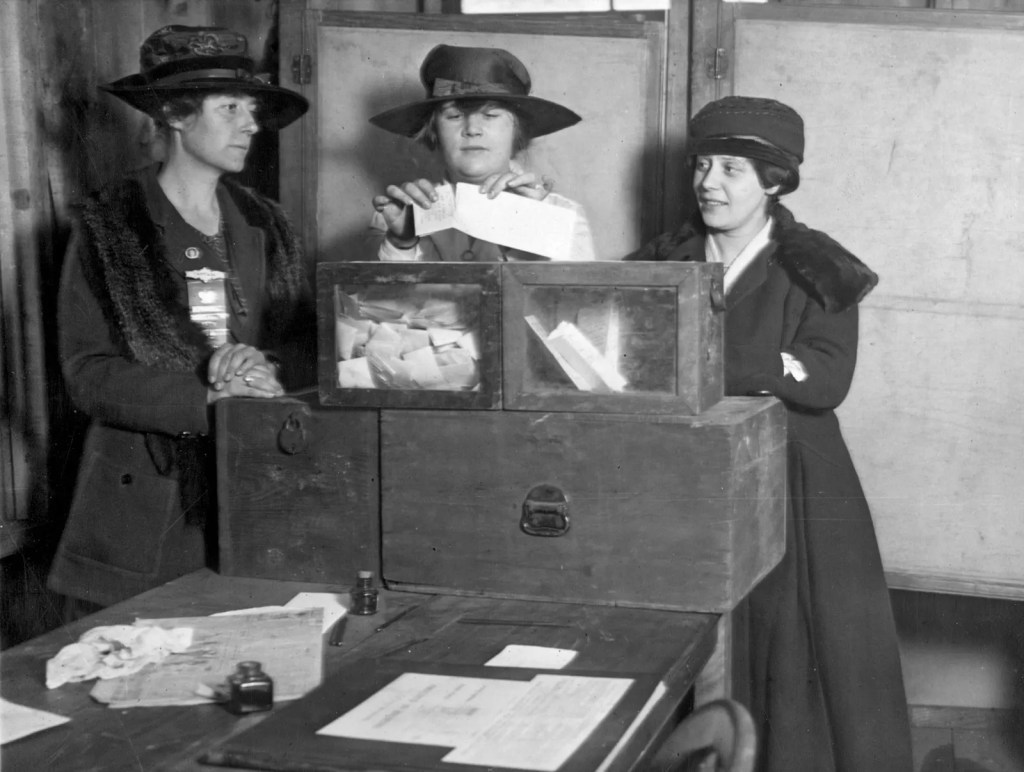


Principle of Freedom - Democratic Republic
Pure democracies are inherently problematic. Why? Well, because the rights of the minority are subject to the whims of the majority.
A democracy cannot exist as a permanent form of government. It can only exist until the voters discover that they can vote themselves largesse from the public treasury.
—Attributed to Alexander Tytler
Or this one, which is more well known:
A democracy is 2 wolves and a lamb voting on what to have for dinner.
A democratic republic, on the other hand, balances majority rule with protections for individual and minority rights through representative government and the rule of law.
Among Covenant Christians how might one apply this principle? Again, only people who are interested in the process need to engage. This honors agency. Naturally you will have interested people throughout the spectrum of opinion; working through the process of reasoning together, rough edges are knocked off, ideas are challenged, new questions are considered and slowly but surely those working through the process come to consensus and acknowledge that everyone has arrived at mutual agreement
I had a recent experience with this sort of experiment. What resulted after we reached consensus? The Lord answered —and in a way no one expected.


Seeking the Lord’s Part
I don’t know about you guys, but if we still do anything formal, my prayer is going to be THANKS FOR ANSWERING OUR QUESTION!!
Seeking the Lord’s Part
I don’t know about you guys, but if we still do anything formal, my prayer is going to be THANKS FOR ANSWERING OUR QUESTION!!
Hypothetically speaking...
What would have happened if after these months of effort, and seven rounds of debate this little group of laborers had invited the general assembly of Covenant Christians to participate in the final vote?
Those who did NOT participate in the process. Those who did NOT have their ideas and opinions challenged, or do the challenging themselves. Those who weren’t able to ask questions and reason together because they never showed up. Do you think the vote would have been unanimous common consent among the general assembly?
Abso-freaking-lutely NOT.
However, everyone was invited to participate. It was widely published among the women, in particular. Those who were interested, joined.
Should the idle eat the bread of the laborer?
If not, what principles does this limitation follow?
- Honoring agency — Everyone is invited. Only those who want to participate will come.
- Democratic Republic —Interested participants generally represent the interests of friends and fellowship.
- Common Consent — Labor concludes when all participants have agreed that they have reached consensus.
Another hypothetical. Let’s say a women’s council is called against Billy Bob Maverick. He’s been acting a little weird and it turns out that he’s been misappropriating tithing funds. So a women’s council is called. Twelve women are gathered from his home fellowship. Eleven of the women take their duty seriously. They listen to all the testimony — consider the evidence. However, one woman who has agreed to sit on the council doesn’t listen when she’s there but doesn’t even show up to half the meetings. When it comes time to vote she votes that the man retains his priesthood certificate. And the balance of the women throw their hands up in frustration.
What should have happened? Well, the reality of the situation is that the council only had 11 members. It was invalid as soon as she disengaged. Participation constitutes a committee, council, congress and conference.
Because there is an explicit requirement to have a minimum of 12 women sitting on any women’s council considering a priesthood certificate, it ought to have been dissolved and re-organized. If she’s not participating then there’s a good chance she has a predetermined outcome. She’s already made up her mind before hearing any of the evidence.
So I ask again: Should the idle eat the bread of the laborer?
Now for a bit of reality.
Between the 2025 April women’s conference and the one in November 2025 there were two sets of regular zoom meetings being held; Common Consent Town Hall following the moon cycles and Women’s Council/Conference Reasoning which met every other Sunday.
The meeting schedules were openly published on Denver’s blog. Some women came to one set of meetings. Some women came to the other. Some women attended both, which meant about 2 hours every week discussing the Provisional document from the first women’s conference in November 2024.
Nobody was forced to attend. It was an open invitation.
The women’s conference in November had intended to be the culmination of the work performed. However by the time of the conference the laborers all said that we weren’t ready and a vote would be premature. Those who hadn’t been coming to any of the Zoom meetings insisted that we hold the vote anyway. So a vote was held. And the majority who hadn’t been doing any of the reasoning rejected the Nov 2024 provisional document. I did not attend nor vote so I was mistaken on the details. Fortunately, the majority chose to abstain making a decision on the Provisional Document.
Going back to The Little Red Hen fable.
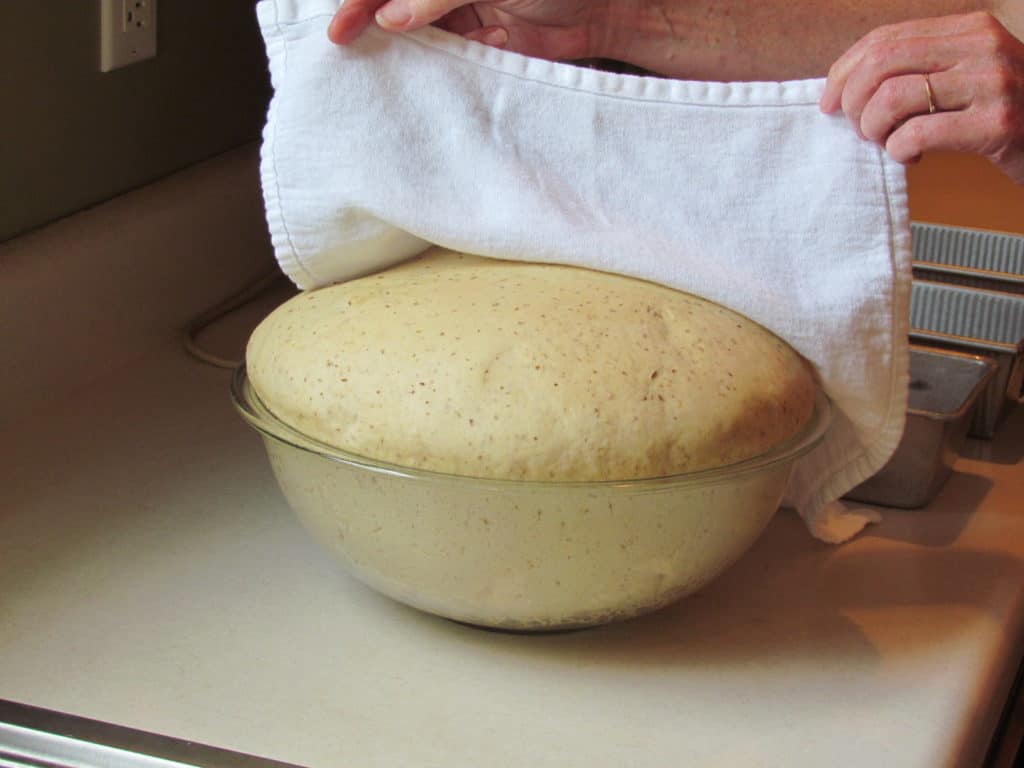
In this analogy, sadly I don’t feel like anyone got to eat the bread. It maybe didn’t even rise yet let alone get put in the oven. The labor was cut short, ending with a blob of dough that was thrown in the trash. It needed patience and respect, and time to rise then more time and patience to bake so we could enjoy it.
I felt that progress was being made. I cried tears of gratitude and thanked the Lord many times for the labor and the sisters engaging in it. I had a real hope that we were moving somewhere and beginning to grow in love for one another. However slow it was, I’ve seen progress.—Comment on Daughters of the Covenant Slack group, used with permission.
I came across this comedy clip awhile back and Bill Burr’s metaphor really resonated with me. The point he is making on abortion is different than my point but the food metaphor is the same. If you find colorful language offensive you’ll want to skip the video.
warning: graphic language
Here is a cleaned up transcript:
Let’s bring…do a nice, normal, mainstream topic. So everybody can drive home happy. No fights. Alright? Sounds good? Alright, great.
Let’s talk abortion. There you go. [laughter]
Pro-choice always made sense to me, ’cause I don’t like people telling me what to do. And I was just like: It’s your body. Who the flip am I to tell YOU what to do with your body? That always made sense. However, I still think you’re killing a baby. [pause] See? That’s where it gets weird.
Pro-choice people are like, “Well it’s not a life yet. It’s not a baby yet.” May or may not be true. I don’t know. I’m not a doctor. But I’ll tell you my gut tells me that doesn’t make sense: “It’s not a baby yet.”
That would be like if I was making a cake and I poured some batter in a pan and I put it in the oven and then 5 minutes later you came by and grabbed the pan and threw it across the floor. And I went, “What the fetch? You just ruined my birthday cake!”
And then you were like, “Well, that wasn’t a cake yet.”
“Well it would have been if you didn’t do what you just did! There would have been a cake in 50 minutes. Something happened to that cake, you cake murdering son-of-a-biscuit-eater!”
Conclusion
If I can get to unanimous common consent (i.e. mutual agreement) with my fellow laborers and NOT have to take a formal vote, that is ideal. The Lord has already demonstrated that He will show up in powerful ways, answering the united heart of a few who have come to unanimity. And, everyone benefits!
Nobody feels compelled or coerced by a a formal vote that they missed out on. There are no elements of compulsion or inequality.
That said, The idle will not eat the bread of the laborer.
You may not appreciate the conclusion unless you’ve done the work.
Next:


Boxes? Check!
In Joseph Smith’s time, his approach to leading was simple: “I teach them correct principles and they govern themselves.”