SIGNATURE SERIES: Study In Goodness, Nature, Archetypes, & Truth; Unveiling Righteousness & Eternity
Read this first: Fundamental Truths in Fairy Tales, Fables, and Legends
Themes: Ascension, Faith, Redemption
If you have an insight that you would like to share there is a contribution box at the bottom of this post.
Source: Blue Fairy Book (updated language from Scottish dialect)
I
And many a hunting song they sung,
And song of game and glee;
Then tuned to plaintive strains their tongue,
“Of Scotland’s love and lee.”
To wilder measures next they turn
“The Black, Black Bull of Norroway!”
Sudden the tapers cease to burn,
The minstrels cease to play.“The Cout of Keeldar,” by J. Leyden.
In Norroway, long ago, there lived a certain lady, and she had three daughters. The oldest of them said to her mother: “Mother, bake me a bannock, and roast me a collop, for I’m going away to seek my fortune.”
Her mother did so; and the daughter went away to an old witch washerwoman and told her purpose. The old wife bade her stay that day, and go and look out of her back door, and see what she could see.
She saw nothing the first day. The second day she did the same, and saw nothing. On the third day she looked again, and saw a coach-and-six coming along the road. She ran in and told the old wife what she saw. “Well,” said the old wife, “that’s for you.” So they took her into the coach, and galloped off.
The second daughter next says to her mother: “Mother, bake me a bannock, and roast me a collop, for I’m going away to seek my fortune.”
Her mother did so; and away she went to the old wife, as her sister had done. On the third day she looked out of the back door, and saw a coach-and-four coming along the road. “Well,” said the old wife, “that’s for you.”
So they took her in, and off they set.
The third daughter says to her mother: “Mother, bake me an bannock, and roast me a collop, for I’m going away to seek my fortune.”
Her mother did so; and away she went to the old witch-wife. She bade her look out of her back door, and see what she could see. She did so; and when she came back said she saw nothing. The second day she did the same, and saw nothing. The third day she looked again, and on coming back said to the old wife she saw nothing but a great Black Bull coming roaring along the road.
“Well,” said the old wife, “that’s for you.”
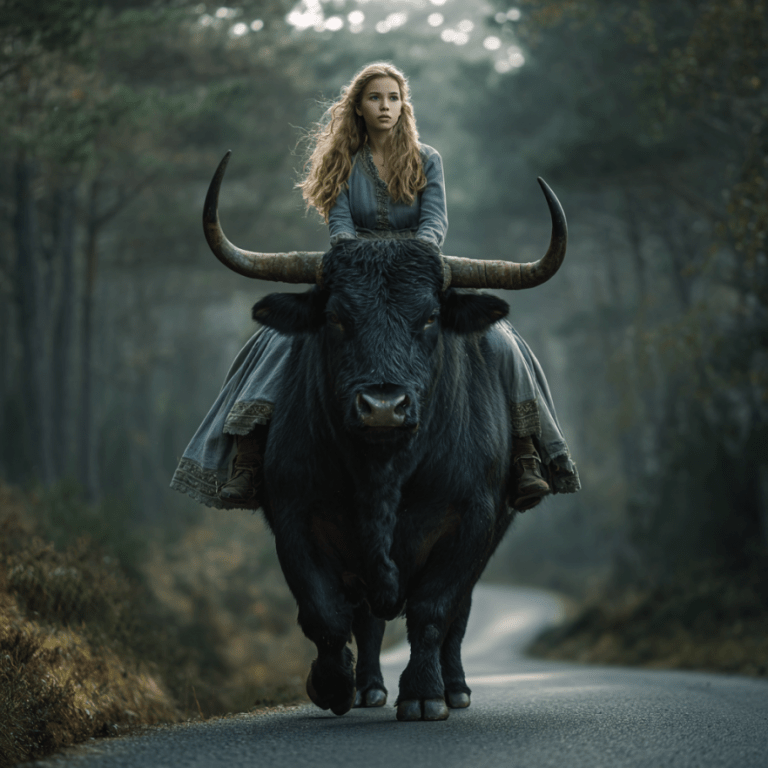
On hearing this she was next to distracted with grief and terror; but she was lifted up and set on his back, and away they went.
bannock (i.e. cake of oat or barley meal), collop (i.e. bacon or steak)
The sets of three appear here at the beginning and are repeated throughout. Good-Better-Best, Water-Wine-Milk, Seek-Ask-Knock, Three knocks, Three degrees, etc.
II
On they traveled, and on they traveled, until the lady grew faint with hunger.
“Eat out of my right lug,” says the Black Bull, “and drink out of my left lug, and set by your leavings.”
So she did as he said, and was wonderfully refreshed. And long they went, and sore they rode, until they came in sight of a very big and beautiful castle.
“Yonder we must be this night,” said the bull; “for my old brother lives yonder”; and presently they were at the place.
They lifted her off his back, and took her in, and sent him away to a park for the night. In the morning, when they brought the bull home, they took the lady into a fine shining parlor, and gave her a beautiful apple, telling her not to break it till she was in the greatest strait ever mortal was in in the world, and that would bring her out of it.
Again she was lifted on the bull’s back, and after she had ridden far, and farther than I can tell, they came in sight of a far more beautiful castle, and far farther away than the last.
Says the bull to her: “Yonder we must be tonight, for my second brother lives yonder”; and they were at the palace directly. They lifted her down and took her in, and sent the bull to the field for the night. In the morning they took the lady into a fine and rich room, and gave her the finest pear she had ever seen, bidding her not to break it till she was in the greatest strait ever mortal could be in, and that would get her out of it. Again she was lifted and set on his back, and away they went.
And long they went, and sore they rode, till they came in sight of the far biggest castle, and far farthest away, they had yet seen. “We must be yonder tonight,” says the bull, “for my young brother lives yonder”; and they were there directly. They lifted her down, took her in, and sent the bull to the field for the night. In the morning they took her into a room, the finest of all, and gave her a plum, telling her not to break it till she was in the greatest strait mortal could be in, and that would get her out of it. Presently they brought home the bull, set the lady on his back, and away they went.
lug = ear
Though unconventional, her betrothed husband provides for her in all of her needs. She is presented at the homes of his three family members and given three fruitful gifts with instructions on when to use them.
III
And on they went, and on they rode, till they came to a dark and dreadful glen, where they stopped, and the lady got down.
Says the bull to her: “Here you must stay till I go and fight the devil. You must seat yourself on that stone, and move neither hand nor foot till I come back, else I’ll never find you again. And if everything round about you turns blue I have beaten the devil; but should everything turn red he’ll have conquered me.”
She set herself down on the stone, and by-and-by all around her turned blue. Overcome with joy, she lifted one foot and crossed it over the other, so glad was she that her companion was victorious. The bull returned and sought for her but never could find her.
The girl is given very strict instructions, which are inadvertently disobeyed. The consequence is that she is separated from her love.
Therefore, whoso heareth these sayings of mine and doeth them, I will liken him unto a wise man who built his house upon a rock; and the rain descended, and the floods came, and the winds blew and beat upon that house, and it fell not, for it was founded upon a rock.
3 Ne. 14:24-27
IV
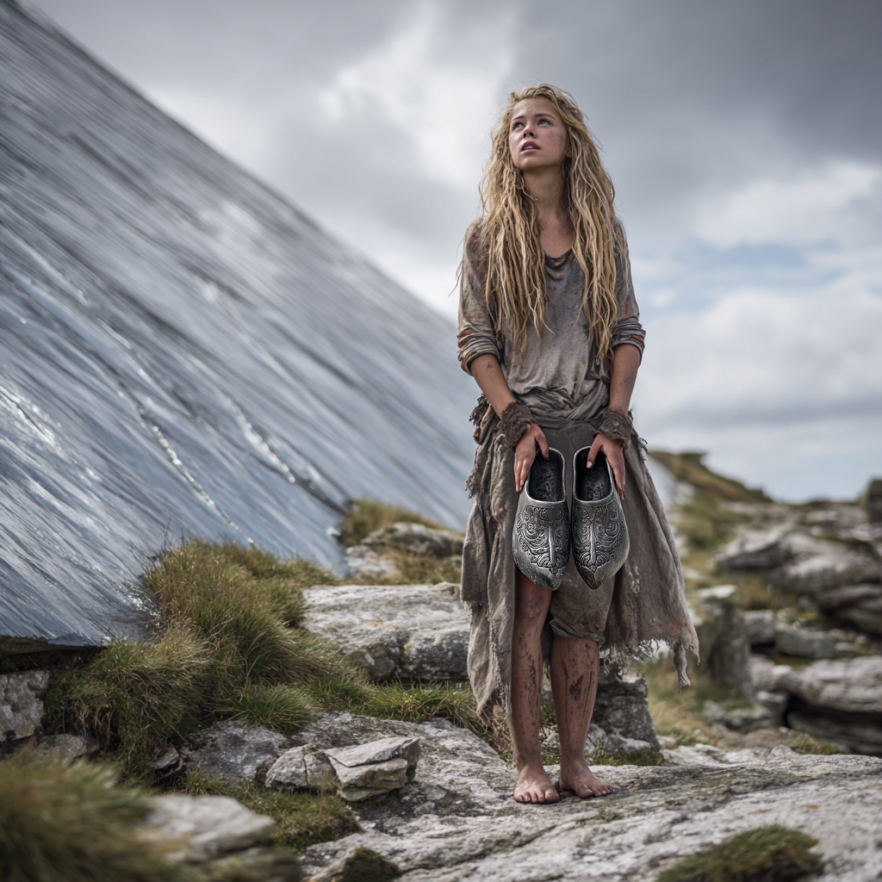
Long she sat, and she wept, till she wearied. At last she rose and went away, she knew not where. On she wandered till she came to a great hill of glass, that she tried all she could to climb, but was not able. Around the bottom of the hill she went, sobbing and seeking a passage over, till at last she came to a smith’s house; and the smith promised, if she would serve him seven years, he would make her iron shoes, with which she could climb over the glassy hill.
The work of redemption begins. The glassy hill, similar to the one in Cinderlad, represents the challenge of ascension. In her case she must first work seven years to earn the shoes that will allow her to climb the glassy hill.
And Laban had two daughters; the name of the elder was Leah, and the name of the younger was Rachel. Leah was tender-eyed, but Rachel was beautiful and well-favored. And Jacob loved Rachel, and said, I will serve you seven years for Rachel, your younger daughter. […] And Jacob served seven years for Rachel. And they seemed unto him but a few days for the love he had to her.
Gen. 29:13-19
V
At seven years’ end she got her iron shoes, climbed the glassy hill, and chanced to come to the old washerwoman’s habitation. There she was told of a gallant young knight that had given in some bloody shirts to wash, and whoever washed those shirts was to be his wife. The old wife had washed till she was tired, and then she set to her daughter, and both washed, and they washed, and they better washed, in hopes of getting the young knight; but all they could do they could not bring out a stain. At length they set the stranger damsel to work; and whenever she began the stains came out pure and clean, but the old wife made the knight believe it was her daughter who had washed the shirts.
The test to successfully wash the bloodied garments identifies the knight’s chosen bride.
Though your sins be as scarlet, they shall be as white as snow; though they be red like crimson, they shall be as wool.
Isaiah 1:18

VI
So the knight and the eldest daughter were to be married, and the stranger damsel was distraught at the thought of it, for she was deeply in love with him. So she thought of her apple, and breaking it, found it filled with gold and precious jewelry, the richest she had ever seen. “All these,” she said to the eldest daughter, “I will give you, on condition that you put off your marriage for one day, and allow me to go into his room alone at night.” So the lady consented; but meanwhile the old wife had prepared a sleeping-drink, and given it to the knight, who drank it, and never awakened till next morning. The whole night the damsel sobbed and sang:
“Seven long years I served for thee, The glassy hill I climbed for thee, The bloody shirt I wrung for thee; And wilt thou not waken and turn to me?”
Next day she did not know what to do for grief. She then broke the pear, and found it filled with jewelry far richer than the contents of the apple. With these jewels she bargained for permission to be a second night in the young knight’s chamber; but the old wife gave him another sleeping-drink, and he again slept till morning. All night she kept sighing and singing as before:
“Seven long years I served for thee, The glassy hill I climbed for thee, The bloody shirt I wrung for thee; And wilt thou not waken and turn to me?”
Still he slept, and she nearly lost hope altogether.
We don’t realize who the knight is at first but the damsel does.
For if the blood of bulls and of goats, and the ashes of a heifer, sprinkling the unclean sanctifies to the purifying of the flesh, how much more shall the blood of Christ — who through the eternal spirit offered himself without spot to God — purge your conscience from dead works to serve the living God?
Heb. 9:11-15
The next time we encounter the damsel’s betrothed husband his form has transformed from bull to man. He is the knight whose garments were soiled with blood, suggesting his condition in the aftermath of his battle with the devil.
The false bride takes credit for the completed task however, the true bride uses the treasured-filled fruit gifts from her beloved’s family to negotiate an opportunity where she can be recognized.
So the wicked are separated from the righteous and from the tree of life, whose fruit is the most valuable and desirable of any fruit and the greatest of all God’s gifts.
She recounts to him, night after night, the tremendous ordeal she has undertaken to regain his presence.

VII
But that day when he was out hunting, somebody asked him what noise and moaning was that they heard all last night in his bedchamber. He said he heard no noise. But they assured him there was; and he resolved to keep waking that night to try what he could hear. That being the third night, and the damsel being between hope and despair, she broke her plum, and it held far the richest jewelry of the three. She bargained as before; and the old wife, as before, took in the sleeping-drink to the young knight’s chamber; but he told her he could not drink it that night without sweetening. And when she went away for some honey to sweeten it with, he poured out the drink, and so made the old wife think he had drunk it. They all went to bed again, and the damsel began, as before, singing:
“Seven long years I served for thee, The glassy hill I climbed for thee, The bloody shirt I wrung for thee; And wilt thou not waken and turn to me?”
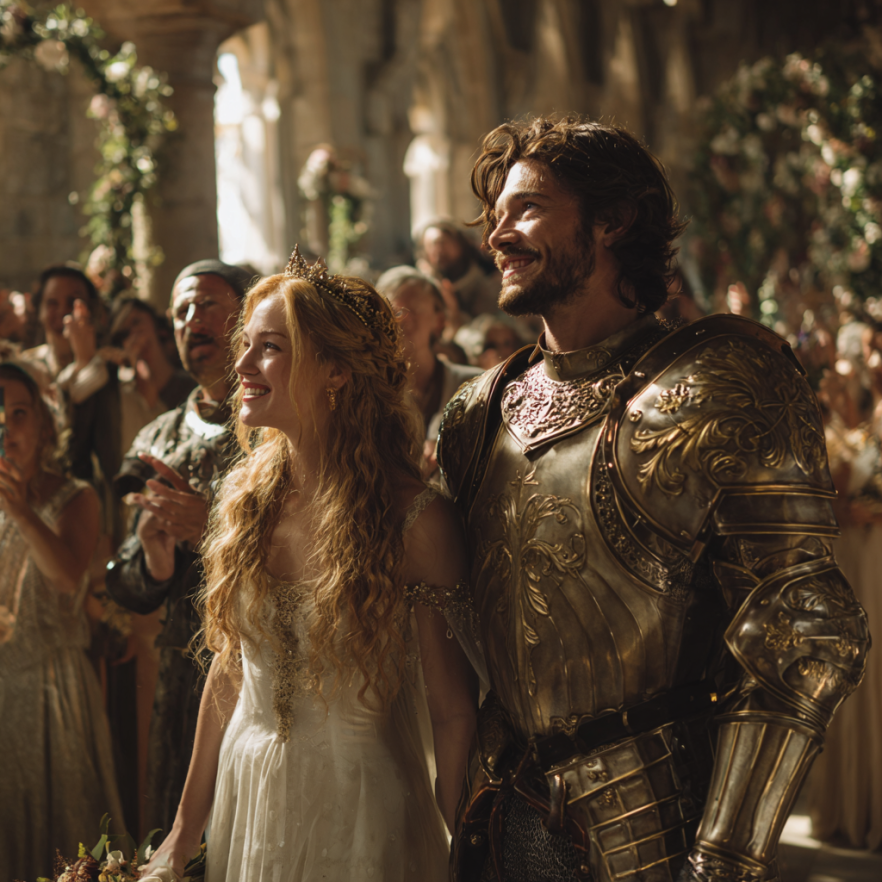
He heard, and turned to her. And she told him all that had befallen her, and he told her all that had happened to him. And he caused the old washerwoman and her daughter to be burned. And they were married, and he and she are living happily to this day, for aught I know.
Awake, awake, put on your strength, O Zion. Put on your beautiful garments, O Jerusalem, the holy city. For henceforth there shall no more come into you the uncircumcised and the unclean. Shake yourself from the dust. Arise, sit down, O Jerusalem. Free yourself from the bands of your neck, O captive daughter of Zion. For thus says the Lord: You have sold yourselves for naught, and you shall be redeemed without money.
Isa. 52:1-6
The day of the wedding feast is also the day of burning.
And the angels sent to harvest the world will gather the wicked into bundles to be burned, but will pass over you as my peculiar treasure.