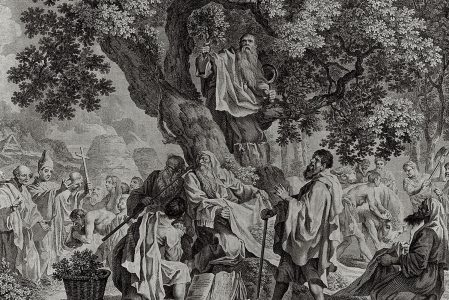
Celtic mythology is a rich tapestry of stories, beliefs, and traditions that shaped both ancient and modern Europe, and at the heart of this cultural landscape stood the Druids, learned figures who bridged the spiritual and practical worlds. The term “Druid” likely comes from the Proto-Indo-European root for “oak,” symbolizing their deep connection to nature and sacred groves.
Far more than religious priests, Druids were philosophers, educators, judges, and mediators whose significance is recorded by ancient writers such as Julius Caesar and later chroniclers. The Druidic community itself was organized into a hierarchy that included the Ovates—initiates who studied nature and divination; the Druids—those responsible for law, philosophy, and mediation; and the Bards—storytellers and historians who preserved Celtic tradition. These roles were supported by a wide range of intellectual and spiritual pursuits: Druids studied astronomy, philosophy, medicine, and the natural world, believing that natural laws were inseparable from societal laws.
As mediators, Druids played a crucial role in conflict resolution, guiding clans and individuals through disputes with wisdom and impartiality. They used dialogue and negotiation to promote understanding, employed symbolic rituals to cleanse spaces of negativity, and sometimes consulted oracles or divination to illuminate the path forward. Mythological examples, such as the Druid Amergin mediating during the mythic invasion of Ireland, illustrate the respect accorded to their role. Their legal authority was equally significant; Druids were custodians of the law—creating, interpreting, and enforcing legal codes grounded not in written statutes but in longstanding oral tradition. Unlike codified contemporary legal systems, Druidic law was fluid and adaptable, evolving with community needs while maintaining a core commitment to justice and fairness. This reliance on oral tradition required rigorous training, as Druids memorized legal precedents, stories, and customs to ensure continuity from generation to generation.
Rituals played an important part in legal proceedings as well, infusing justice with spiritual meaning. Legal decisions were sanctified through ceremonies involving offerings, prayers, and the invocation of deities; communal gatherings helped resolve conflicts; ritual cleansing marked the preparation for major judgments; and feasts celebrated restored harmony. Because spirituality and law were inseparable in Druidic culture, decisions were always grounded in moral and ethical considerations and crafted to support the welfare and balance of the community. Punishment under Druidic authority reflected this orientation: restorative practices were favored over punitive ones. Offenders might face public shaming to encourage accountability, be required to offer restitution to victims or the broader community, or participate in rituals of atonement designed to restore cosmic and social balance. Case studies in Celtic lore describe how such practices repaired relationships, rebuilt trust, and preserved communal cohesion.
The Religion of the Ancient Celts: Chapter XX. The Druids | Sacred Texts Archive