

Aimee K
Introduction
My husband and I have been reading scriptures together because it’s common ground that we can both agree upon. We meet as equals, just reading side by side. Him reading aloud from the LDS copy of the King James Bible and me following along in the Restoration Edition. He let’s me make the JST insertions when applicable, but he was fact checking me meticulously at first.
We are currently in Leviticus, and let me tell you that it’s second-hand embarrassing that the Lord had to be so explicit in forbidding every possible iteration of uncovering nakedness. Three chapters worth. Not your father, mother, sister, sisters-in-law, grandchildren, aunts, uncles, daughters, daughters-in-law, etc., etc..
The Lord is patient. He meets us where we are. 3500 years later I’m going, What the hell, people?!!? However, that’s historical moral superiority. Hypocrisy at its finest. I don’t know what my moral compass would have been if I was born as a slave into ancient Egypt.
If you lay all of the explicit instructions out one at a time, you’ve created a handy-dandy check list of what is acceptable and what is not.
Eventually Israel made enough progress that they could be governed by a Commandment instead: “Thou shalt not commit adultery”
Fast forward to the covenant people in the Book of Mormon and that exhaustive checklist from Leviticus has been distilled down into the principle of chastity.
Principles take up FAR fewer pages in the scriptures. There is no grey area. There are no loopholes. Living by principles instead of check-boxes make life infinitely more rich.
School Lunch
Above are two examples of school lunch. US school lunch requirements include the following 5 components:
Fruits and Vegetables: At least one serving of fruit or vegetable must be included in each meal.
Grains: At least 80% of weekly grains must be whole grain-rich.
Protein: Lean protein sources must be included.
Dairy: Schools must offer low-fat or fat-free milk options.
Caloric and Nutritional Limits for sodium, and added sugars.
Both lunches have checked ALL the boxes for a balanced meal. Ergo facto…They are the same!!!
C’mon. Nobody seriously believes that. And if anyone tries to claim that those two lunches are equivalent…follow the profit. The audacity!
Which one would you want to eat?
One lunch is just checking the required boxes and the other is prepared following principles of health and nutrition.
Education
California Public Education requirements for graduation:
English: 3 credits
Math: 2 credits
Science: 2 credits
Social Studies: 3 credits
Sure certain students can graduate high school. But a piece of paper doth not an education make. Many inner city high-school graduates are barely literate.
A private school education requires greater sacrifice on the part of the parents to select an institution that aligns with their values and goals and then pay hefty tuition out of pocket. However the educational opportunities expand to include foreign language, art, music, dance, theater, clubs and sports. With accountability to invested parents, private schools do more than just check minimum standard boxes.
Home-school education requires less monetary sacrifice but more time and effort. Families that are educating their children directly might be able to include field trips to National Monuments, local science museums, art museums, zoos and parks, and all with personalized curriculum. They have the freedom to cultivate their child’s interests and curate services that provide lessons in horseback riding, sewing, martial arts, fishing, firearms, and wilderness survival. Not to mention snuggles and reassurance from your parent/teacher.
I will point out a fact on this subject: Homeschool students are known to dominate at spelling bees. [source 1], [source 2], [source 3]
Even without the excursions and extra-curricular activities, what is the principle in play that is driving a superior education?
To answer that question, let me first tell you a story.
Sonya Robinson Copeland was born in rural Tennessee and married at age 13 to a man 15 years her senior. Two children later she fled her abusive marriage to raise their sons on her own as a single mother. Working as a housekeeper in Detroit to support her family, she noticed that in the homes of her affluent clients, they all seemed to have large libraries.
Unfortunately, without the stabilizing influence of a good father, Sonya’s son Benjamin had significant anger issues and even tried to stab another child at school. Early on Benjamin was considered one of the lowest performing students among his peers. Sonya only had a third grade education herself. When she realized where her son’s trajectory would take him, she imposed new and strict rules. Television time became extremely limited. The boys were required to read two library books per week and write reports on each. She couldn’t check for grammar and spelling, so she focused instead on effort and discipline. Over time Benjamin’s vocabulary increased, his reading comprehension improved, and his academic performance skyrocketed.
Ben went on to graduate from Yale University and then attended the University of Michigan’s Medical School. Benjamin Carson became a neurosurgeon and later the Director of Pediatric Neurosurgery at Johns Hopkins Hospital.
So what do I personally think was behind his educational success? The love of his mother.
Having an adult guiding a child’s education following the principle of love has the power to launch that child into the stratosphere. And Sonya did it without money and without having an education beyond elementary school.
You will be astonished at how much children are capable of understanding! But I have to warn you, when you begin to teach your children, if you decide to discharge your obligation to them, you’re gonna make them strangers and foreigners and sojourners—and you’re gonna have to find other people who are like-minded and willing to teach their children and discharge their responsibility, so that your kids know that there’s more than just your family that’s interested in comprehending the gospel of Jesus Christ.
—Talk 9 Marriage and Family
Water Fountains
The 1960’s phrase, “separate but equal” is, to this day, cited as the height of moral absurdity. Fortunately courts later recognized it as codified inequality.
Were there two fountains? CHECK.
Did they both have water? …uh…sometimes?
Water fountains for colored citizens were almost always poorly maintained, broken or dirty, placed in inferior or hidden locations. Disparities in oversight and funding exacerbated the problem. And amidst all of it, black children got the message that they were inferior and unfit to share space with their lighter skinned peers.
Now consider the water fountains that are frequently found in airports. There is a normal height fountain, a lower fountain for children and people in wheelchairs, and a water dispenser for people who would like to stay hydrated on the go. There are three fountains readily accessible and additionally designed to be convenient for everyone and anyone.
The principle we are considering in both of these examples is equality.
President of the United States
Answering questions about the alleged affair with Monica Lewinsky, President Bill Clinton emphatically declared, “I. DID. NOT. HAVE… sexual relations with that woman.”
When further evidence came out Clinton’s legal team argued that “sexual relations” meant intercourse and did not include other forms of intimate contact. What he declared under oath avoided a direct lie under that narrow definition. However, he knew that he was intentionally obfuscating the reality of the situation.
As a young boy George Washington chopped at a cherry tree in his exuberance to try out his new hatchet. When his father asked him about it, he famously answered, “I cannot tell a lie; I did cut it with my hatchet.” His father was so impressed at George’s courage he wasn’t even angry. He praised George, declaring that his integrity was worth more than a thousand trees.
Both Presidents told the truth —technically speaking, and if narrow definitions are applied —but only one honored the principle of truth.
Sign on the dotted line
Coming into any hospital emergency room you are required to sign their disclosures and authorization to treat. However, if you’re in an emergency room it’s likely urgent if not life threatening. You do not have the luxury of scrolling through the 15 page document on their little screen to read the fine print before signing. Did they provide the terms and conditions to you in advance? Yes, you had every opportunity to read it. I wonder what the stats are on anyone who actually does. I suspect its very low if not less than 0.01%
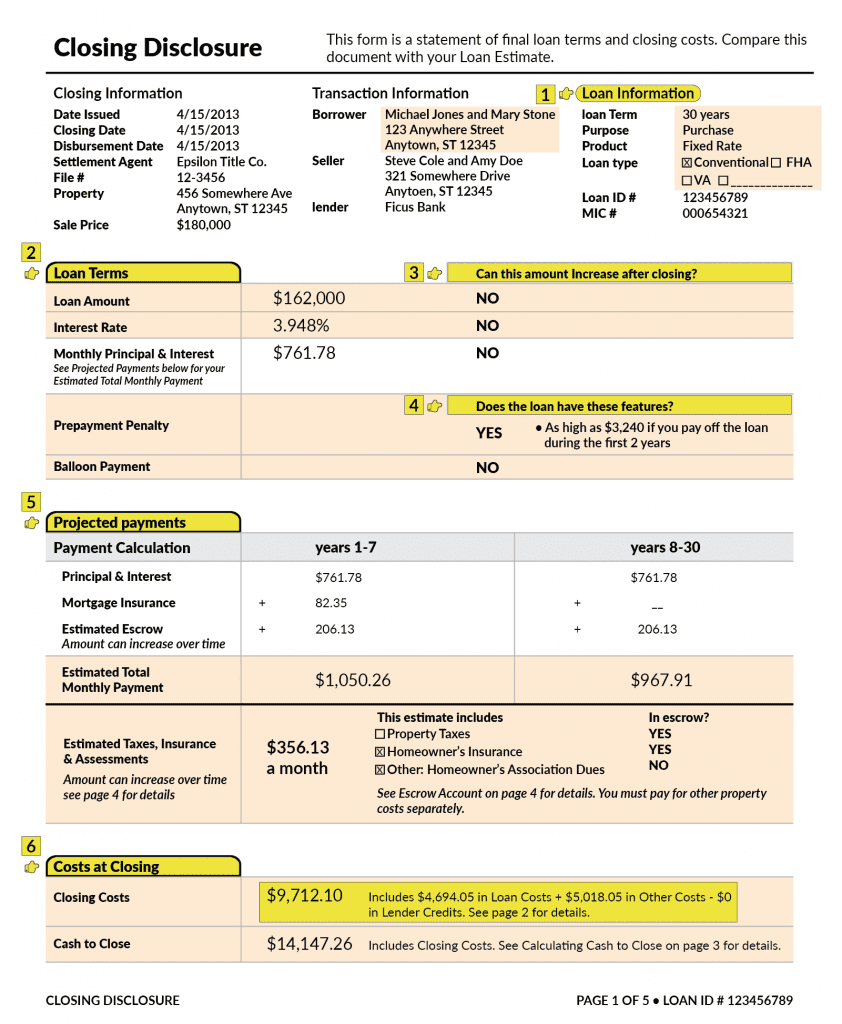
On the other hand, closing documents for the sale of a house are explicit, highlighted, circled — full disclosure. The notary public will sit with you for however long it takes for you to read every page and consider whether or not you would like to sign. I recall we did a re-finance when rates were super low. My husband and I sat and read through all of the pages. I got to one page in particular that didn’t sound quite copacetic (i.e. fine; completely satisfactory) so I called our mortgage guy. He was able to explain it further and when we were satisfied with the explanation, we signed it and moved on.
So in this example we see the principle of knowledge both violated and kept with full disclosure and transparency.
Medicine
In our not too distant past we had a world-wide pandemic: Covid-19. Normally vaccines are dead viruses being introduced to trigger an immune response without actually infecting a person. However, mRNA shots were labeled as “vaccines” even though they had a completely different mechanism of action. The shots were developed at lightning speed bypassing the normal FDA requirements for safety and efficacy. No one held you down and jabbed it into you. However, many people were coerced by threatening their livelihoods.
Don’t want to get vaccinated? No problem. It’s OK if you want to be selfish, but unfortunately we will have to end our employment relationship with you; you can’t work here anymore. Oh and by the way, you’ll be forfeiting your pension, healthcare in retirement, GI Bill eligibility, and access to VA benefits. But we’re not forcing you to do anything. You are totally free to choose. Good luck! …ya frickin’ ignoramus.
On the other hand consider the patient controlled analgesia pump. Post surgery patients can manage their pain by personally deciding when the next dose is needed. There is no schedule, there’s no need to beg a nurse for relief. Patients have complete autonomy at the push of a button.
Yes, people are free to choose in both cases. CHECK! Only one observes the principle of honoring agency.
Animal Husbandry
If you have ever driven from Northern California to Southern California on Interstate-5 there’s a feeding lot called Harris Ranch where cows are shoulder to shoulder, sometimes knee deep in their own manure. Along the fence where they feed they are so crowded that you could walk along their backs and not fall between them. My family refers to this feed lot as “the stinky cows”. And believe you me, the smell is horrendous for miles both before and after you pass the feed lot.
Now let me tell you about Temple.
Temple Grandin was diagnosed with autism at an early age and didn’t speak until she was four years old. Her mother tailored her education, also following principles of love, and Temple went on to achieve a Ph.D. in Animal Science from the University of Illinois. Temple empathized with the animals on cattle ranches recognizing that the process of harvesting the cows was unnecessarily terrifying. Stressed cows equal tough meat. But the meat quality wasn’t her motivation. She genuinely cared for the animals and determined to serve and take care of them.
Temple designed industry revolutionizing livestock handling systems that managed the animal’s sensory experience. Cattle naturally follow curves, so a curved design prevented them from seeing people ahead or dead ends with harvesting equipment. The curved pattern also made them feel like they were returning where they came from. Solid block walls instead of fences eliminated distractions from outside the shoot which reduced balking and backing up. Grooved concrete surfaces were designed to match their hoof biomechanics allowing the cows to gently walk into the water bath without falling or drowning. Lighting continuity, noise reduction, a gradual restraint system; all of these kept the cow calm and feeling safe, right up to the end.
Unfortunately, experienced ranchers resisted her designs often altering key aspects of them which resulted in disaster. For example, not understanding the purpose of the concrete grooves preceding the descent into the water bath, ranch hands overlaid the slope with sheet metal making cows slip into the water. Many drownings resulted and Temple was blamed, accusing her of creating a bad design.
Today Temple Grandin’s designs are recognized for their revolutionary genius.
Now, I’m sure the Harris Ranch checks all of the boxes for their Beef Quality Assurance (BQA) certification, however, Temple Grandin’s designs exemplify the principle of stewardship.
On Trial
In the classic novel, To Kill a Mockingbird Tom Robinson is accused of raping and severely beating a white woman named Mayella Ewell. The trial is set in the fictional town of Maycomb Alabama during the 1930’s —a time when real racial tensions were high and systematic racism was prevalent in the United States.
Testimony during the trial revealed that Mayella’s injuries were primarily on the right side of her face. But no medical professional testified on her behalf. The case relied on untrained descriptions of her injuries without the benefit of medical records or any type of documentation. Mayella contradicted herself when cross-examined and showed visible fear in court. But the fear was directed towards her father and not Tom. Atticus Finch, Tom’s legal council, asked Mayella’s father if he could read and write. The implied insult enraged the man so much that he willingly demonstrated that he could in-fact, sign his name. But he used his left hand. Only a left hand does damage to the right side when under a full frontal attack. Tom’s left arm, however was caught in a cotton gin as a child and the muscles in his left arm were severely damaged.
Tom’s testimony put the events into perspective. Tom treated Mayella with kindness, respect, helping her with chores and not expecting anything in return. He often listened to what she had to say and represented dignity and stability, both of which she was lacking under her father’s roof. So one day Mayella invited him into the house and kissed him. Bob Ewell appeared yelling and threatening Tom, so he immediately fled.
Atticus didn’t outright accuse Mayella’s father Bob Ewell of beating his own daughter after she had kissed Tom, but all the circumstantial evidence seemed to point strongly to this possibility. In closing arguments Atticus pleaded with the jury, “In the name of God, do your duty!”
Although Tom was able to testify, face his accusers, and go through due process, the jury — tainted by prejudice — found him guilty of the assault.
Contrast this fictional trial to the real one that took place in the early days before the Revolution.
In 1770, after what became known as the Boston Massacre, British soldiers stood trial for killing five colonists during a volatile street confrontation in Boston. British authority was already resented. Most people already knew what verdict they wanted before the trial even began.
Going against the public sentiment John Adams agreed to defend the British soldiers and uphold the principles of freedom that he envisioned for our future nation, even if it meant defending the enemy’s representatives.
Adams understood that if the law only protects the popular, it protects no one. He took the case knowing it would damage his reputation and possibly end his legal career.
Testimony showed that the soldiers were surrounded by a hostile crowd throwing snowballs, clubs, and debris. The situation was chaotic. The prosecution could not prove premeditated murder. The evidence supported fear and confusion, not intent. Adams reminded the jury that “facts are stubborn things,” and that anger, however justified, was not evidence.
The verdict enraged the public. Most of the soldiers were acquitted. Two were convicted only of manslaughter and branded on the thumb.
The verdict was was not rendered to appease the frothing mob. It was given because the evidence demanded it.
Both situations the rule of law was upheld and due process observed. But in only one case was the principle of justice upheld.
Conclusion
I’ll let you draw your own conclusions on which you’d prefer: checked boxes or living by principles.
Next:

Man of Sorrows
He is despised and rejected of men — a man of sorrows and acquainted with grief. And we hid, as it were, our faces from him.





This Post Has 2 Comments
These examples are great. The school lunch one vivid.
I thought so too! When I was writing just one big long post the only example I had of checking boxes vs principles was the school lunch. Carolyn suggested I break the blogpost up, which gave me more space to really expound on each principle. What fleshed out was so much better!! Like, who’s going to disagree with any of the examples I used?