Reformation

The Protestant Reformation dramatically impacted the world. Even the target of the protest, Roman Catholicism, was improved by the rebellion. Unchallenged Catholic hegemony over political, economic, and religious life in Europe led naturally and inevitably to abuse. When Protestants gave people a choice, it forced Catholicism to compete. An early
Luther's 95 Theses. Zwingli published his 67th thesis, or criticisms of Catholicism. Unlike Luther's specific topic of the sale of indulgences, Zwingli attacked Catholicism generally. His first statement directly rejected the 1302 Catholic claim that there was no salvation outside the Roman Catholic Church. Zwingli declared, "All who say that
John Calvin was a contemporary of Martin Luther. Calvin's teachings developed into five Calvinist principles to summarize the core of Christian theology. These five principles are, first, the total depravity of man; second, God's unconditional election; third, a limited atonement; fourth, irresistible grace; and fifth, the perseverance of the saints.
One of the remarkable things throughout history, is the timing of who lives at the same time. It seems as if when God chooses to change the course of human history, His most effective means to accomplish that is to send into the world the right people at the right
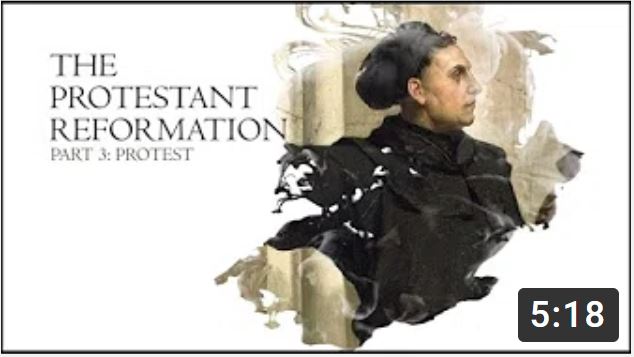
The Protestant Reformation is dated from a specific event that happened 500 years ago this coming October on Sunday, October 31, 1517. Martin Luther publicly published his list of 95 criticisms of the Catholic practice of selling indulgences. This document is referred to as the 95 Theses. The 95 Theses
Martin Luther displayed his extraordinary courage when he publicly criticized the Catholic Church. Only before his courageous act, Catholic critics had been burned at the stake in Czechoslovakia and in Florence. When Martin Luther decided to openly criticize the church, his decision put his life at risk. This extraordinary courage
There's a backstory to the commencement of the Protestant Reformation that, while it runs all the way back to the time of the post-apostolic fathers and following them, the events between the close of the New Testament and the Council of Nicaea. There were more immediate events that showed the