Festival of Ganesha on the Fourth Day
The festival of Ganesh Chaturthi (4th day) is marked with the installation of Ganesha’s murtis (devotional representation of the deity), privately in homes and publicly on elaborate pandals (temporary stages). The ten day festival typically falls between the 22nd of August and the 20th of September.
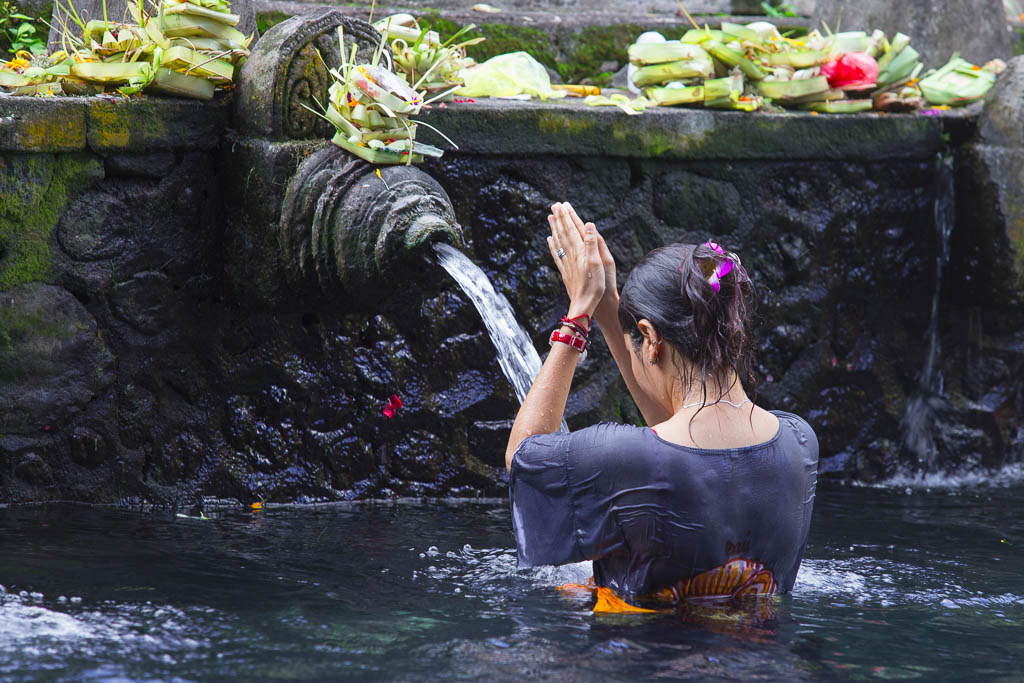
The Ganesh murtis (statue) is made of clay with every intention to be temporary. Families celebrate with it for several days commemorating Ganesh’s birthday, and then on the 10th day carry it in a joyful parade to a river, lake, or the sea. There, they gently lower the murtis (statue) into the water and let it dissolve, called Ganesh Visarjan (immersion).
The purpose in doing this is to remind devotees that all physical things are temporary. The statue is made from the earth, enjoyed for a short time, and then returned to nature. Immersion is symbolic of death.
- The body returns to the five elements (pancha bhuta).
- The soul returns to its eternal source.
The celebration of Ganesh Chaturthi also denotes the significance of the cycle of birth, life and death.
The name Ganesha is a Sanskrit compound, joining the words gana (gaṇa), meaning a ‘group, multitude, or categorical system’ and isha (īśa), meaning ‘lord or master’. The word gaṇa when associated with Ganesha is often taken to refer to the gaṇas, a troop of semi-divine beings that form part of the retinue of Shiva, Ganesha’s father. The term more generally means a category, class, community, association, or corporation. Some commentators interpret the name “Lord of the Gaṇas” to mean “Lord of Hosts” or “Lord of created categories”, such as the elements.