


Aimee K
Previously

Order of Priesthood
It was explained once that if we view priesthood as an association we can understand the orders of priesthood as man to man (brotherhood), man to angels (Aaronic), man to Son of God (Melchizedek), and man to Father (Patriarchal).
Relying on the earlier explanation in this series of the duality that exists, we ought to expect that priestesshood would have a similar order. I won’t pretend that I know what that exactly looks like, but I suspect it will be scripturally obvious once dispensationally revealed.
Regardless of who holds the priesthood keys to officiate in ordinances, everyone has equal access to receive.
It is not necessary to hold priesthood authority to receive the ordinances, for they are ministered to all, male and female, alike. Any convert can receive them, just as I, as a convert, have received them. Faithfulness alone decides if you will receive the offered ordinances. It is up to you to determine if you will receive them, and then whether you will keep them afterward. You must receive these ordinances and be obedient to them, or the promised Second Comforter is not available.
The Second Comforter – Conversing with the Lord through the Veil
Chapter Twenty: TESTIMONY, SAYINGS AND CONCLUSION, paragraph 30 (approx. page 414)
First Ordinances
An ordinance is an established rite or ceremony establishing a covenant containing both promises and obligations.
The primordial ordinance in the Doctrine of Christ, is baptism. It is performed publicly through the authority of Aaronic priesthood and is part of the gateway leading to eternal life (2Ne 13:3 RE, 2Ne 31:17 LE).
Baptism is the first ordinance of the Gospel. Baptism is a wholebody experience. The entire person is immersed in water, nothing left above the surface. The symbol points powerfully to Christ’s own burial and resurrection as the person baptized is “buried” under water and then brought again back to the air through a symbolic “resurrection.” Left too long in a state of immersion, you would die. The ordinance is a graphic symbol of death and burial, because it literally places you in a position where you cannot breathe.
2006-06-14 The Second Comforter – Conversing with the Lord through the Veil
Chapter Eighteen: THE TEMPLE AS A TOOL, paragraph 13 (approx. page 369)
Now consider the work of a woman in bringing life into the world. The water of the womb, the spirit of the child, the blood of the mother. There is a parallel drawn by the Lord himself between baptism and birth.
Nicodemus said unto him, How can a man be born when he is old? Can he enter the second time into his mother’s womb and be born? Jesus answered, Truly, truly I say unto you, except a man be born of water and the spirit, he cannot enter into the kingdom of God. That which is born of the flesh is flesh, and that which is born of the spirit is spirit.
John 2:2 RE, John 3:4-6 KJV
Much to the chagrin of many progressive LDS women, the authority given to a man cannot be assumed by a woman. But conversely, the authority given to a woman cannot be assumed by a man.
The ordinances men perform are public. The ordinances women perform are private.
Until things are reversed at the Millennium, it will remain for men alone to perform the public ordinances thus far given to us.
[…]
This answer refers to “public rites” and not to those rites and performances the public are excluded from knowing. The Holy Order conveys blessings and information that is withheld from the world. But men and women jointly obtain the Holy Order.
Birth is the primordial event of mortality and the gateway into life itself. No man has come into the world, but by a woman.
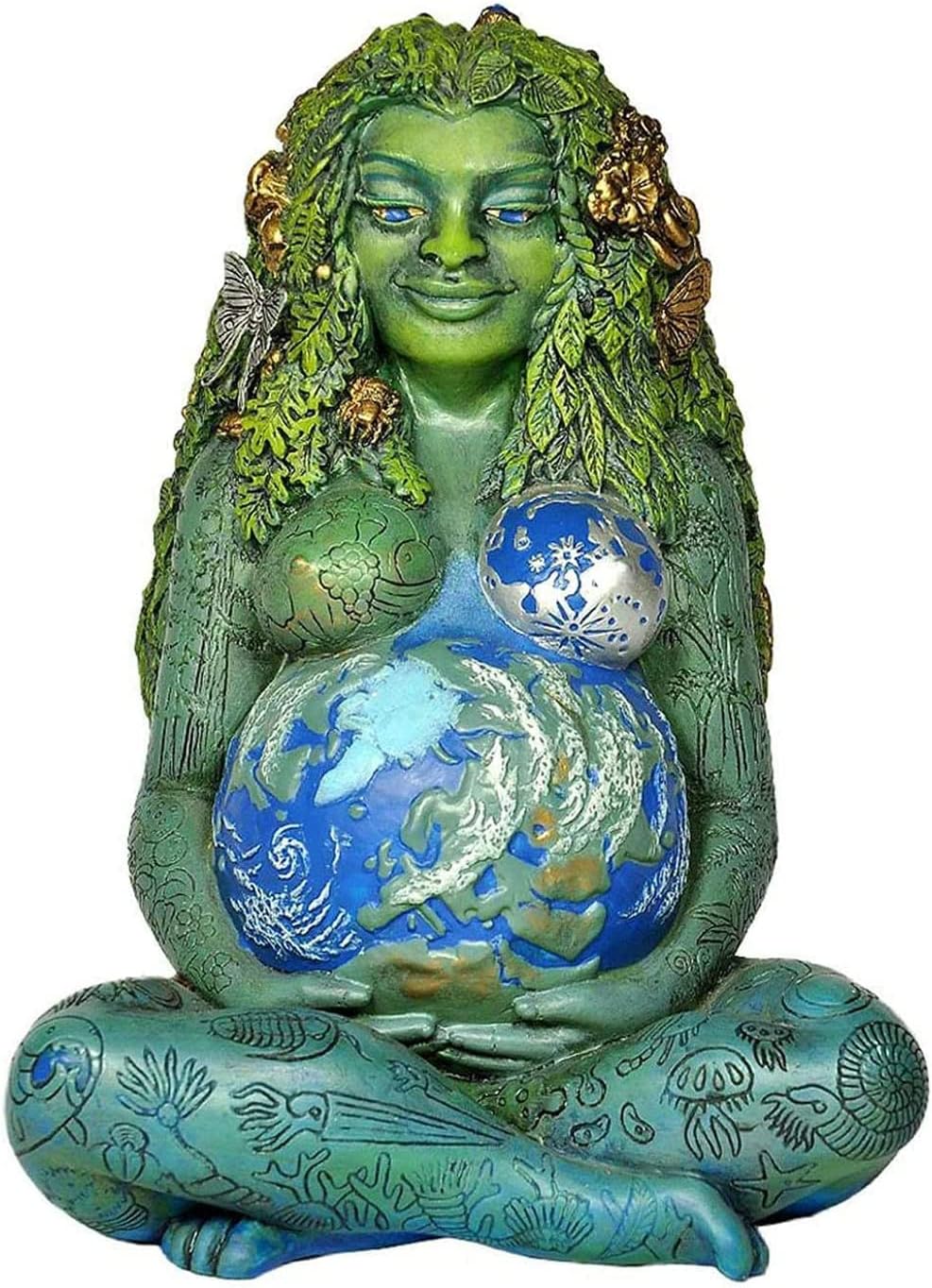
From whence does woman receive her divinely appointed power? From Heavenly Mother Herself. Women are literally empowered by a Goddess…this is no small thing.
[Eve] had to be the direct descendant of the Heavenly Mother in order to endow her with her Mother’s creative abilities. That power belongs to the Mother. The fertility of Eve—and thereafter of all the daughters of Eve—came because of the power given from direct descent from the Heavenly Mother.
Prior to winning Mrs. American 2023, Hannah Neeleman was asked “When have you felt the most empowered?” Following is her response:
I have felt this feeling seven times now, as I bring these sacred souls to the earth. After I hold that newborn baby in my arms, the feeling of motherhood and bringing them into the earth is the most empowering feeling I have ever felt.
Hannah Neeleman
Paid and unpaid work
The original corruption of priest and priestess, as it turns out, just so happens to be the first professions that monetized rites and ordinances that should have been held in sacred trust.
In law school, there was this saying about the two oldest professions are prostitutes and lawyers. But lawyers, back in that sense, were ministers because the canon of law was the Scriptures. And so everyone wanted, you know, a legal ruling on what the Scriptures meant.
And therefore, the two oldest professions are prostitutes and the ministry, as it turns out. And ministers almost invariably make a great deal of money profiting from the sheep.
Balance in Authority
This authority to create life is given to women. It is a woman’s prerogative to control intimate union. As a balance to this authority, it is a man’s prerogative to control marital contracts.
Originally, the bar to enter into a marital covenant was not only high, it was severe.
In the beginning, when a son of Adam and a daughter of Eve covenanted to marry, the son of Adam shed blood by circumcision in order to seal the marriage covenant. Once healed, the marriage was consummated, at which point the virgin daughter of Eve shed blood to complete the sealing of the marriage covenant.
Religion of the Fathers, p. 45, March 2021
Originally circumcision was an adult ordinance.
Given the severity of the commitment, men demonstrated their willingness to covenant to this woman through their own blood sacrifice. Their most vulnerable member on the altar. I’m quite certain that Zion’s people will return to this as an adult ordinance, rather than the current tradition of infant circumcision. And isn’t it properly ordered that men be at liberty to chose this sacrifice rather than having it foisted upon them as babies?
And thus following, one of the ordinances women perform as priestess, is to accept a man in the act of procreation. In the Holy of Holies (which can be considered as both the bridal chamber and the womb) seed of man conceives within the woman.
When the ordinance is performed and a covenant made to bring life into the world, it is an act of self-hatred and iniquity (in-equality, to the utmost degree) to kill the life that was invited, by covenant, to enter the world.
What is fertilization, if not the ordained order by which a child is created?
In the temple there are two people who are veiled*. One is the woman. The other is the Lord. One brings spirits into mortality. The other brings mortals into eternal life.
* Prior to freelance changes made in 2019.

What are the obligations attendant upon creating life?
You have clothed me with skin and flesh, and have knit me together with bones and sinews (Job 4:10).
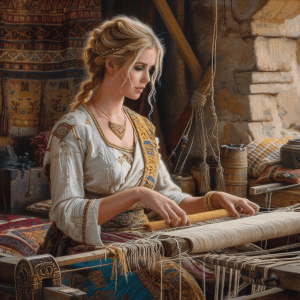
It is the work of the priestess to both weave the mortal tabernacle of the child in her womb and then, at the appointed time, give birth.
I have a personal theory that anciently pregnant women spent their time weaving in the temple. Both a metaphorical, and practical activity during the last few months for the clothing of the naked babe. Women’s weaving was one temple activity that was expelled during Josiah’s reformations (2 Kings 7:10).
In Spanish, the phrase for giving birth is, “dar a luz”, and the words literally translate as “to give to light”. At the moment of conception, we now know there is a flash of light. Light has entered the world, within the secret Holy Chamber.
Sisters of the Priestesshood
Bearing a child is still one of the most dangerous things a woman can do. It’s the sixth most common cause of death among women age 20 to 34 in the United States. In the 1600s and 1700s, the death rate was 1200 per 100,000 births. That is the risk per birth, so the lifetime risk was closer to 4%.
Who holds a mother’s hand as she approaches the valley of the shadow of death? These are the sisters of the priestesshood. They can be found in the canon, but by a different name: midwives.
And the king of Egypt spoke to the Hebrew midwives, of whom the name of the one was Shiphrah and the name of the other Puah. And he said, When you do the office of a midwife to the Hebrew women and see them upon the birth stools, if it is a son, then you shall kill him; but if it is a daughter, then she shall live.
But the midwives feared God and did not as the king of Egypt commanded them, but saved the men children alive.
And the king of Egypt called for the midwives and said unto them, Why have you done this thing and have saved the men children alive? And the midwives said unto Pharaoh, Because the Hebrew women are not as the Egyptian women, for they are lively and are delivered before the midwives come in unto them.
Therefore, God dealt well with the midwives, and the people multiplied and waxed very mighty. And it came to pass because the midwives feared God that he made them houses.
Exodus 1:3 RE, Exod. 1:15-22
These women were no shrinking violets. Standing up to Pharaoh in blatant disobedience and then and lying to his face. All this to protect their sisters and their infant sons. Badass.
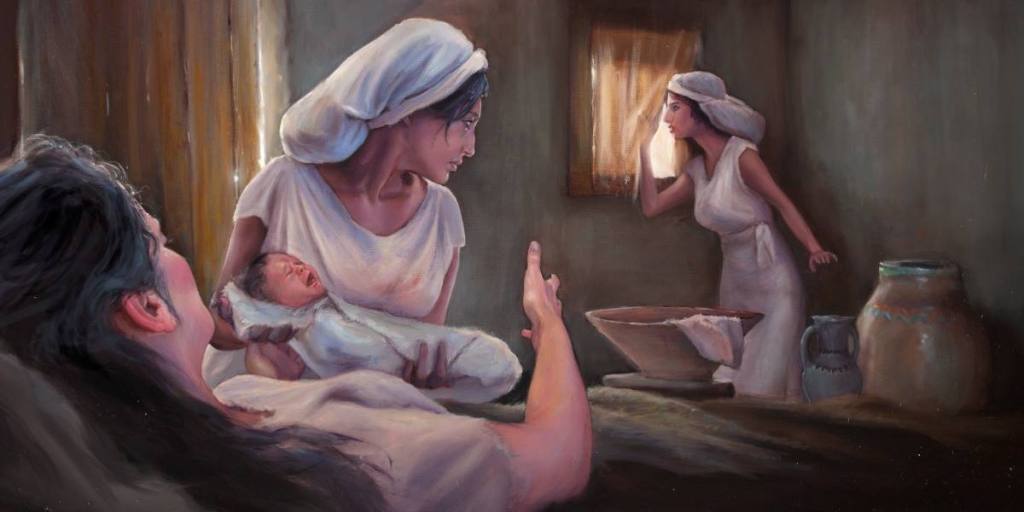
While not mentioned anywhere in available scripture I do believe that Mary had midwife attendants with her when she delivered our Lord. Many years ago I read an account of a woman who saw in vision the details of Mary’s labor and delivery. Attempting to find it now, unfortunately the blog no longer exists where I had it bookmarked. What I remember from her account is that Mary’s labor was extraordinarily hard, but that women were there to help her deliver. She too walked dangerously near the valley of death in her effort to bring the Lord into the world. When He was born the midwives laid him on her chest, and he healed her from the near fatal exhaustion and loss of blood. I wish I remembered more.
It wasn’t until the early 1800’s that men were involved in childbirth at all. Before then it was considered obscene for a man to be present at a birth. When the doctors edged their way into the potentially lucrative business of childbirth they inadvertently caused a spike in maternal deaths. This was because many went directly from performing autopsies to delivering babies without washing their hands in between. Then these men had the audacity to be offended at the suggestion that they had unclean hands [ref: Death in Childbirth: An International Study of Maternal Care and Maternal Mortality 1800-1950].
Temple Groves and the Tree of Life
Josiah cut down and burned the groves that surrounded the temple (2 Kings 7:10). Why? I believe it was because they were associated with the work of Priestesses.
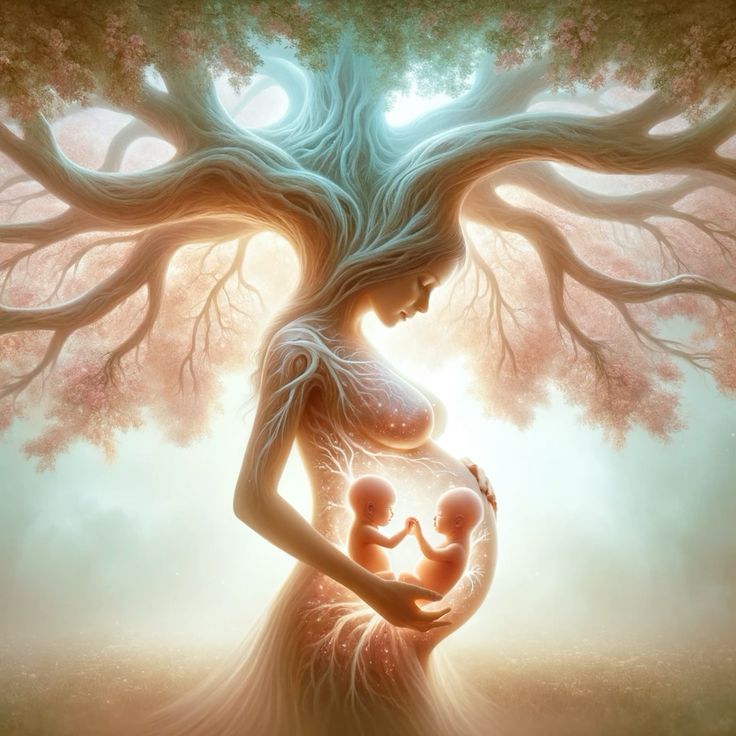
The veins on a placenta look like a tree, and I believe it is Heavenly Mother’s personal signature on each and every baby that comes into the world. There are many independent cultures around the world that bury the placenta under a tree dedicated to the child. A living tribute to a living person. These are planted on the family’s home land, so a child would always have literal roots to their first home. The Rebirth of Placenta Rituals – SAPIENS
I suspect that originally the groves that surrounded the temple were made up of these tribute trees. Anything that is original and significant seems to get corrupted into a false pattern. I don’t think that the groves were inherently associated with false worship, but rather looped into the purge of the Goddess from the temple during the Deuteronomic reforms under Josiah.


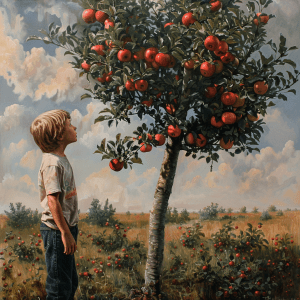

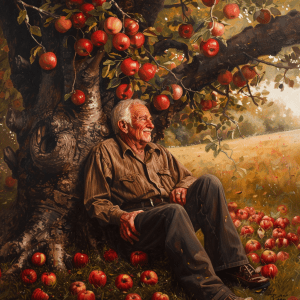
Not only were new trees planted when children were born, older “grandmother trees” were an important and sacred place when it was time for women to give birth.
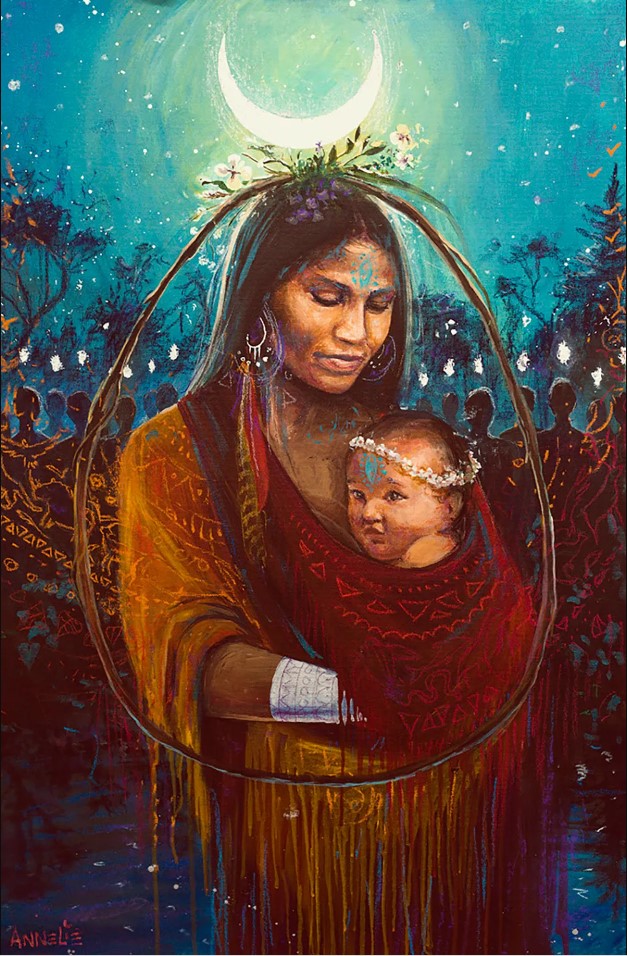
Certain trees may be culturally significant to First Nations women and families during pregnancy and childbirth. Birthing trees may be places of shelter for women during labour and birth. They may also be where placentas are buried after giving birth. [source]
This agrees with the various translations we have of Song of Solomon 8:5:
“Who is this coming up from the wilderness Leaning on her beloved?” “ Beneath the apple tree I awakened you; There your mother was in labor with you, There she was in labor and gave you birth.” (NASB)
Who is that coming up from the wilderness, leaning on her beloved? Under the apple tree I awakened you. There your mother was in labor with you; there she who bore you was in labor. (ESV)
Even across cultures, in the record Life of Buddah, Queen Maya (see ref) is recorded as holding onto “a rare tree” while giving birth.
Was the original temple the place where covenant women, sisters in the priestesshood, would go to deliver their sons and daughters? I don’t know, but I would not be one bit surprised to learn if that were the case.
Within the ancient temple we have early records that the Asherah tree representing Wisdom and the original Tree of Life resided therein.
The tree of life was represented in Solomon’s temple. The Asherah tree, and by association wisdom, were the symbol and figures most hated by the Deuteronomist reformers. Her vessels (KJV) or articles (NIV) including the Asherah tree were housed in the temple, but they were dramatically removed and burned in Lehi’s day.
p.45 Mormon Kosmokrator.
These original groves were planted one tree at a time. As new children were born to the people, the placenta was taken and buried in the ground around the temple with a seedling tree. The fruit bearing tree type may have been associated with a particular family group. Or perhaps it was chosen to reflect some meaningful blessing for the new baby.
The righteous shall flourish like the palm tree, he shall grow like a cedar in Lebanon. Those that are planted in the house of the Lord shall flourish in the courts of our God. They shall still bring forth fruit in old age. They shall be fat and flourishing to show that the Lord is upright. He is my rock, and there is no unrighteousness in him.
Psalms 92:3
Perhaps each of the twelve olive trees that were planted were literal trees in a living parable, one for each of the twelve sons of Jacob.
And now I will show unto you a parable that you may know my will concerning the redemption of Zion: A certain nobleman had a spot of land, very choice, and he said unto his servants, Go into my vineyard, even upon this very choice piece of land, and plant twelve olive trees, and set watchmen round about them; and build a tower, that one may overlook the land round about to be a watchman upon the tower, that my olive trees may not be broken down when the enemy shall come to spoil and take unto themselves the fruit of my vineyard.
In 3 Nephi 21:15-18 there is described some “highly specific purging” including plucking up of the groves. If groves are a symbolic of a people, and that does seem to be the case, then the destruction of a wicked people would also involve destroying their symbolic claim on the land.
What are the “groves” that are to be plucked up? Why are the groves also “in the midst of thee?” The ancient usage of groves involved fertility rites, sacred sexual practices, or the worship of intercourse. What modern versions of this ancient form of fertility worship would be similar to the ancient behavior as to merit being called the same thing? 3 Nephi 21: 15-18 — Denver Snuffer
In The Ten Parables, Chapter 5: The Weathered Tree, the trees were all personified. The forest below was prideful and cruel. The old weathered tree atop the granite outcropping withstood their abuse and the harsh conditions while in isolation. After a lumber mill harvested the wicked forest, the Weathered Tree replanted the valley with her own pine cones. The seedlings grew over many years and, unlike the previous trees, these, her children, grew in goodness and prized her for her wisdom.
Groves being cut down was not only a symbolic of the destruction of the community, it was a disinheritance of the land, and very real loss of a source of food.
Sacrifice & Intercession
Any mother worth her salt will tell you that motherhood is rife with sacrifices. Personal space, a full night’s sleep, hip bones permanently shifting during pregnancy. This growing person taking up residence inside your body, womb gymnastics all hours of the day and night. Kicking internal organs. Attached at the breast for the first year including when they grow teeth and learn how to use them.
Pooped on, peed on, spit, snot, boogers, barf.
Constant messes.
And mother bringing order out of chaos again and again and again.
Work and sacrifice ought to be considered synonymous here. Motherhood is the hero’s journey for women. And it is 24 hours a day vigilance where she is passively saving the baby’s life by making sure he doesn’t choke to death on some random floor grommet. Responding to their needs while neglecting her own. Meanwhile she is battling an internal demon that looks an awful like an immature princess with unreasonable expectations.
From the outside it doesn’t look particularly heroic or glamorous. Motherhood will humble you in ways nothing else will.
But is it all of this so important? Is having children really worth all the effort?
Civilization itself collapses without women willing to sacrifice themselves in being mothers.
When you have time, I’d highly recommend watching the documentary Birth Gap, which unravels the mystery of collapsing birthrates in industrialized countries around the world.
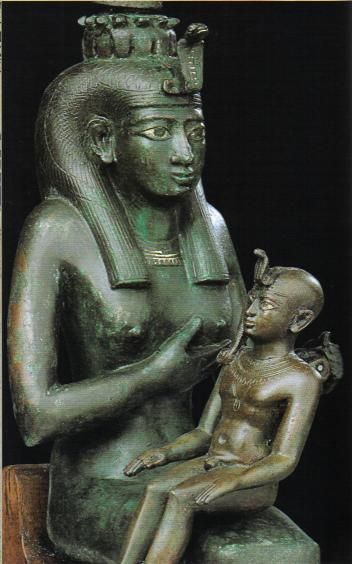
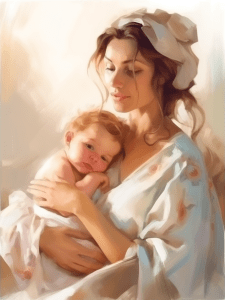
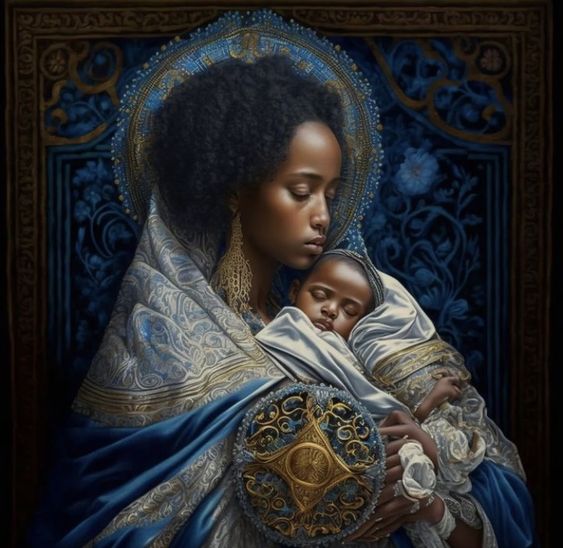
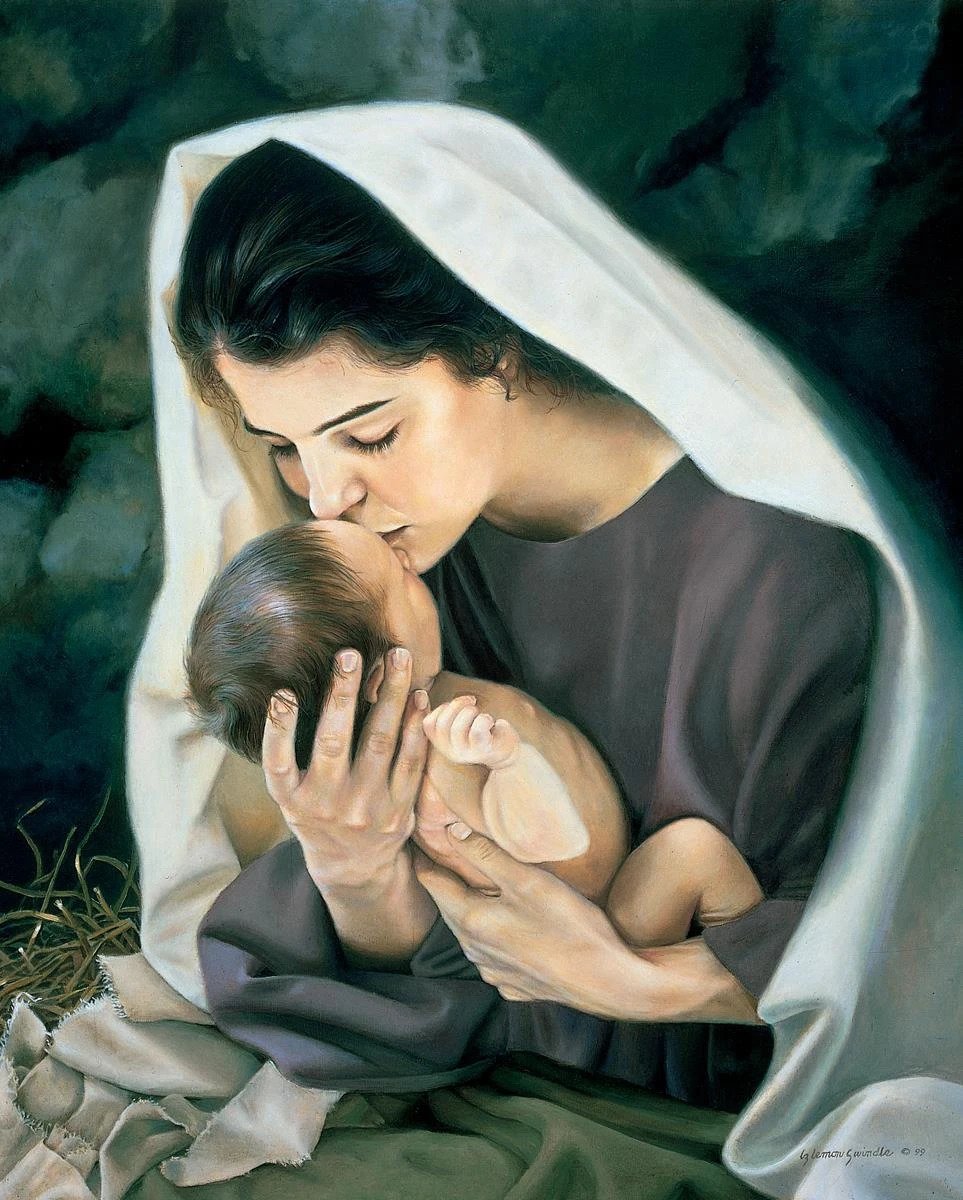
The sacrifice that women make, especially in relationship to infants, is pretty obvious and should be celebrated. Which is why the image of the Divine Mother and the infant is a sacred image, and any society that doesn’t hold that as sacred is off the rails in some fundamental manner, regardless of what anyone says.
And that’s not merely a Christian image, by any stretch of the imagination. The Egyptians had images of Isis with Horus on her lap that are clear prefigurations of the images of Mary and Christ.
Of course, the society has to worship the mother and the infant because, well, obviously, if you can’t see that, or if you don’t want to accept that, I don’t know what you’re rebelling against, but it’s certainly the spirit of life itself.
Homemaker
“The homemaker has the ultimate career. All other careers exist for one purpose only - and that is to support the ultimate career.”
C.S. Lewis
A wise woman builds her home.
One that is beautiful, inviting, organized and functional.
She works:
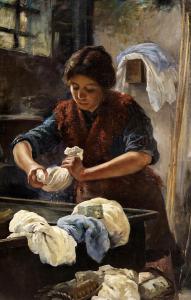
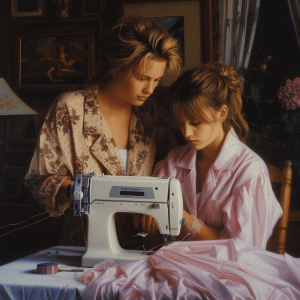
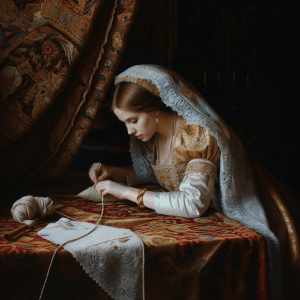
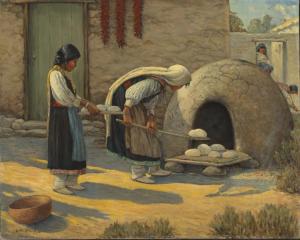
Preserving the meat. Baking the bread. Preparing the meals. Canning the harvest from the garden. Weaving the cloth. Sewing the clothes. Doing the laundry. Cleaning the house. Healing the sick. Tending the children.
“She seeks wool and flax, and works willingly with her hands. She is like the merchants’ ships, she brings her food from afar. She rises also while it is yet night, and gives food to her household and a portion to her maidens. She considers a field and buys it; with the fruit of her hands she plants a vineyard. She girds her loins with strength, and strengthens her arms. She perceives that her merchandise is good, her candle goes not out by night. She lays her hands to the spindle, and her hands hold the rod. […] She makes fine linen and sells it. […] She looks well to the ways of her household and eats not the bread of idleness.”
Proverbs 6:3 RE, Prov. 31:10-31 KJV







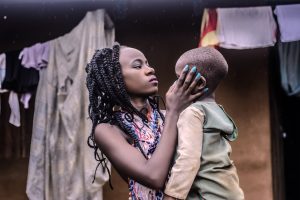
@zimcolorado As a woman it is mr priviledge and joy to be a homemaker, the creator of a peaceful envinronment for my family! . . #homemaker #homemakerlife #tradwife #housewife #tradwifelife #homemaking #wethehomemakers #homemakerlifestyle #homemakertiktok ♬ original sound - Faithphilli
We live in a day and age where traditional homemaking has been forgotten about, and even looked down on, where women are fighting to be in the same positions as men; indoctrinated to focus more on their careers, and less on the home. When God created men and women, more than just biologically different, our roles are meant to compliment each other, not to compete. Our husbands are to be the bread winners, as we are to be the bread makers. Somewhere along the line, feminine has been replaced with feminism with the sole purpose of keeping women out of the home, which forces those to rely on the government to teach and raise our children. Marriage is falling apart, because the God who created it is being left out of it. and an overall disconnect in the home, because the one created to nurture has been empowered to neglect it.
@Faithphilli original sound, TikTok
Bread Winner
While fathers undoubtedly share a bond with their children, research highlights that the most significant influence on their children’s health stems from creating a secure financial and emotionally environment for the mother and providing support in her journey of motherhood.
A happy, secure mother results in healthy children.
Fathers provide love for their children primarily by fostering a nurturing and understanding environment for the mother. Thoughtful men recognize that their foremost responsibility is to care for the mother of their children as her happiness defines the health and happiness of the children.
He must ensure that she can prioritize her health with his support and is financially and emotionally secure, because her health predicts the children’s health. This is backed by evidence.
In contrast, research shows that every time a man makes the mother cry, it will be detrimental to his baby because of the close mother-child attachment, especially during the 4th trimester.
How should a father provide? This is where the Aaronic trades come in.
The Levites were given apportioned land surrounding the temple grounds for each tribe as a designated city center of the Aaronic trades. The proverbial butcher, baker, and candlestick makers.
And behold, the courses of the priests and the Levites, even they shall be with you for all the service of the house of God. And there shall be with you for all manner of workmanship every willing skillful man, for any manner of service.
1 Chronicles 12:8 RE, 1 Chronicles 28:21 KJV
An Aaronic trade is any earthly, tangible work. That’s why there is payment for goods and services. Carpenter, blacksmith, brick mason, shoemaker, barber, cooper, farmer, shepherd or any other worthwhile profession.
And he also commanded them that the priests whom he had ordained should labor with their own hands for their support. And there was one day in every week that was set apart that they should gather themselves together to teach the people, and to worship the Lord their God, and also as often as it was in their power to assemble themselves together. And the priests were not to depend upon the people for their support, but for their labor they were to receive the grace of God, that they might wax strong in the spirit, having the knowledge of God, that they might teach with power and authority from God.
Mosiah 9:10 RE
If that wasn’t clear enough, here is another scripture regarding any who might want to pawn off their responsibilities on others.
But if any provide not for his own, and especially for those of his own house, he has denied the faith and is worse than an unbeliever. 1 Tim 1:13 RE



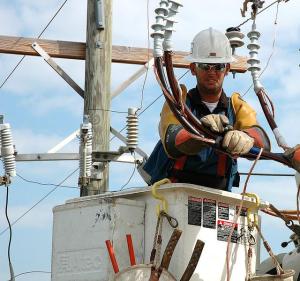

There is much essential work that simply cannot be done by women for differences in inherent danger and required strength. Many of our modern conveniences are made possible by strong, brave men working going out and doing what women physically cannot.
Roofers, linemen, loggers, derrick operators, deep sea fishermen and iron workers to name a few.
Now obviously there are men and women in many of the same professions that don’t need a biological advantage. For my part, I have my degree in engineering, which is overwhelmingly a male dominated field. There aren’t hard, fast rules when it comes to professional and home-based work except with a handful of things.
The point remains that men and women are built differently. But work and sacrifice is required of us all.
While at Work
Have you ever noticed how in the scriptures men are always going up into the mountains to commune with god? Yet in the scriptures we hardly ever hear of women going to the mountains, and we know why—right?
Because the women were too busy keeping life going; they couldn’t abandon babies, meals, homes, fires, gardens, and a thousand responsibilities to make the climb into the mountains!
I was complaining about this to a friend the other day, saying that even as a modern woman I feel like I’m never “free” enough from my responsibilities, never in a quiet enough, or holy enough spot to have the type of communion I want with God.
Her response floored me, “That is why God comes to women. Men have to climb the mountain to meet God, but God comes to women where ever they are.”
I have been pondering on her words for weeks and have searched my scriptures to see that what she said is true. God does in deed come to women where they are, when they are doing their ordinary, everyday work. He meets them at the wells where they draw water for their families, in their homes, in their kitchens, in their gardens. He comes to them as they sit beside sickbeds, as they give birth, care for the elderly, and perform necessary mourning and burial rites.
Even the women at the empty tomb, who were the first to witness Christ’s resurrection, were only there because they were doing the womanly chore of properly preparing Christ’s body for burial. In this seemingly mundane and ordinary task these women found themselves face to face with divinity.
So if— like me—you ever start to bemoan the fact that you don’t have as much time to spend in the mountains with God as you would like.
Remember, God comes to women.
He knows where we are and the burdens we carry.
He sees us, and if we open our eyes and our hearts we will see Him, even in the most ordinary places and in the most ordinary things.
Heather Farrell, Facebook post April 2020
I want to clarify a point here: It is not OK for men to abandon their families to go off and seek God in a mountain, across the sea, or in some foreign land. I’m looking at you, Odysseus.
Going up the mountain is metaphor, and one that I addressed in a previous post. The extent that men ought to leave the home it is to provide a living. If your work takes you up the mountain because you’re a lumberjack or a surveyor, God will meet you there. But don’t expect that He will validate any self serving, shows of pretended righteousness.
Conclusion
What is “priestly?” Whether it is done by a “priest” or by a “priestess” what exactly is “priestly?”
At the core, to perform a priestly act is to do something for the Lord; to act as His surrogate, or to act as His agent. The greatest of these priestly acts are rendered through service to others, and can be done by anyone, almost at any time, and in almost any circumstance.
When administering relief to others, you can act on the Lord’s behalf. When you clothe the naked and needy, or visit the sick and confined, or feed the hungry, you are doing His work. (Matt. 25: 34-46.)
When you serve others, you are a priestess whom the Lord will recognize and are the one He intends to exalt. (Matt. 23: 11-12.) It is not the ruler who will be honored, but the servant. (Matt. 23: 8-12.)
There is nothing to envy from anyone who receives public acclaim, praise, adoration and celebration. (Matt. 23: 5-8.) When crowds gather to proclaim your greatness, this is neither priestly nor godly, and you have your reward. (Matt. 6: 1-4.) But when you serve in quiet and are faithful in secret, then you are priestly and the Lord will honor you. (Matt. 6: 5-6.)
There is nothing preventing you from acting the part of the priestess in blessing others and serving on the Lord’s behalf. (D&C 58: 26-29.) If you wait to act the part of a priestess until someone calls you to a priestly position, and then only want to hold office to be seen and recognized as a priestess, then you have failed to know your Lord.
There are ordinances that are specific to Priest and Priestess. We ought not be jealous of the authority of our counterparts, which benefit, ultimately we all have access to.
The message I really wanted to drive home here is that what Priest and Priestess do is WORK. Priesthood is a call to ministry and service. It is work and sacrifice; and THAT is priestly.
Coming Soon

King & Queen, Temple Series Part 5








This Post Has One Comment
Absolutely wonderful series!