Legend
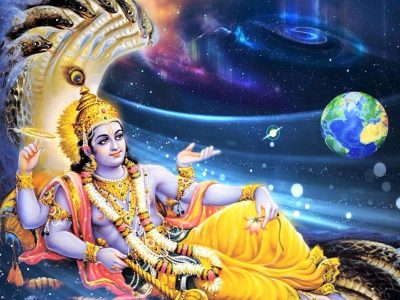
Long ago, during the Satya Yuga (the first age of the world), a mighty demon named Mura terrorized the universe. He was so powerful that even the gods were helpless against him. In desperation, they sought the protection of Lord Vishnu, the preserver of the cosmos.
Lord Vishnu fought Mura fiercely for thousands of years. During the battle, Vishnu took refuge in a cave to rest. Mura, discovering Vishnu sleeping, saw an opportunity to strike. But just as he raised his weapon, something miraculous happened.
From Vishnu’s body emerged a radiant feminine energy—a goddess with divine power and fierce determination. She battled Mura and killed him instantly.
When Vishnu awoke and saw the slain demon, he was astonished. He asked the divine woman who she was and how she had destroyed Mura.
She replied:
“I am the manifestation of your own inner energy. I appeared to protect you while you rested.”
Vishnu was deeply pleased and gave her a name: Ekadashi, since she had appeared on the 11th lunar day. He blessed her, saying:
“You emerged from My own body on the eleventh day of the waning moon, and therefore I name you Ekadashi. Whoever observes a fast on this day and devotes themselves to spiritual practice will be freed from sin and attain liberation.”
Source: The Origin of Ekādaśī and the Killing of Demon Mura [Chapter 38]
Symbolism
Mura represents the undisciplined mind and base desires that rise up when we spiritually “sleep.”
Ekadashi is the higher self, born of divine awareness, that fights to protect our inner sanctum.
Fasting is the weapon—it silences the noise of the senses so the soul can rise victorious.
Additional Notes:
The demon’s name varies slightly across traditions: Mura, Murdanav, or Murdanavāsura.
Though the Vedas (such as the Rigveda, Yajurveda, etc.) are older and foundational, they don’t mention Ekadashi specifically. The concept of regular fasting tied to lunar cycles evolved in the Smriti period, particularly in the Puranas, which are rich with devotional stories and practices.
In some Vaishnava traditions, commentaries also associate Ekadashi with the spiritual discipline of controlling the mind (manas)—hence her emergence from Vishnu’s 11th sense.
How Faithful Hindus Practice Ekadashi:
What Day is Ekadashi?
Ekadashi falls on the 11th lunar day (tithi) of each fortnight in the Hindu lunar calendar.
That means twice a month:
Once during the waxing moon phase (called Shukla Paksha — the bright half)
Once during the waning moon phase (called Krishna Paksha — the dark half)
Since the Hindu calendar is based on moon phases, Ekadashi does not fall on the same weekday every month.
It can land on any day—Monday, Thursday, Saturday—depending on the lunar cycle.
Fasting (Upavasa)
Most devotees abstain from grains, beans, and certain vegetables (like spinach and heavy legumes), because they are believed to carry negative energy (tamas and rajas) on this day.
Some observe a full fast (no food, sometimes even no water—especially on Nirjala Ekadashi).
Others practice a partial fast, eating only fruits, nuts, milk, and non-grain foods like potatoes.
Increased Spiritual Activity
Reading scriptures, especially texts like the Bhagavad Gita or Vishnu Sahasranama (a hymn of Vishnu’s thousand names).
Chanting mantras (like Om Namo Narayanaya or Hare Krishna).
Visiting temples and offering prayers to Lord Vishnu or Krishna.
Avoiding Negative Activities
Practitioners avoid gossip, anger, lying, and indulgence in sensory pleasures.
They try to maintain mental purity—focusing the mind on God.
Night Vigil (Jagaran)
Some devotees stay awake through the night, singing bhajans (devotional songs) and meditating, to show devotion and heightened spiritual focus.
Breaking the Fast (Parana)
The fast is carefully broken the next day (on Dvadashi, the 12th lunar day), at the right time window after sunrise.
Breaking the fast improperly or too late is considered spiritually less beneficial.
Key Spiritual Ideas Behind the Practice:
Self-control over bodily desires purifies the heart.
Aligning with lunar rhythms magnifies spiritual results.
Devotion to Vishnu or Krishna is the ultimate goal—not just abstaining from food.
Fasting = offering oneself—body, mind, and desires—at the feet of God.