The Melukat ceremony is deeply rooted in Balinese Hinduism and is performed to purify individuals from spiritual impurities, emotional burdens, and negative energies. The term “melukat” derives from the old Javanese word “lukat,” meaning “to cleanse” or “to purify.” This ritual is not only a personal cleansing but also a way to restore balance between the physical and spiritual realms, reflecting the Balinese belief in the harmony of the seen (sekala) and unseen (niskala) worlds.
Purpose and Significance
Balinese people often engage in Melukat during significant life transitions, after experiencing trauma, or simply to maintain spiritual cleanliness. The ceremony is believed to help release leteh, or impurities, that accumulate over time due to stress, illness, or negative experiences. It is also performed as a preventive measure to ensure ongoing harmony and good fortune.
The Ritual Process
Preparation: Participants typically present offerings (canang sari) at a temple shrine to seek permission and express their intentions for the ritual.
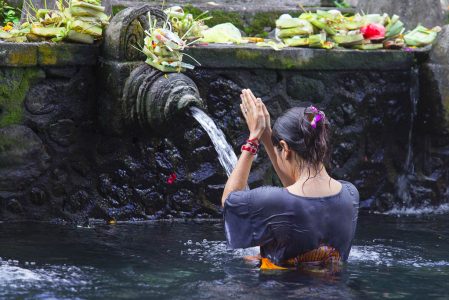
Cleansing: The ceremony involves bathing in holy water (tirta) sourced from sacred springs or temples. This water is blessed by a priest and is considered to carry spiritual energy.
Prayers and Blessings: Guided by a local priest (pemangku), participants recite prayers and mantras while bathing in the holy water, which is believed to cleanse both the body and spirit.
Completion: After the ritual, participants often express gratitude and may drink some of the holy water to purify their inner selves.