
Aimee K
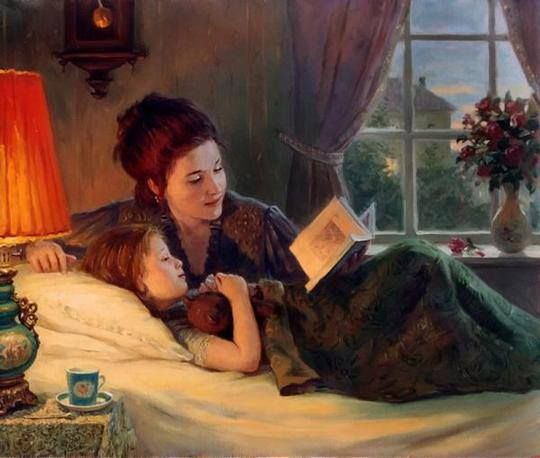
I attended a home-school conference in Southern California a number of years ago. There was one talk that still stands out in my mind given by Andrew Pudewa of IEW. He was explaining the deep, almost esoteric truths that are woven into fairy tales.
If you want your children to be intelligent, read them fairy tales. If you want them to be more intelligent, read them more fairy tales.
Albert Einstein
Moral-Imaginative Framework
Andrew Pudewa teaches that all stories may be categorized in one of four ways:
1. Whole Stories
-
Good is good, evil is evil — and the difference is clear.
-
The hero is flawed but noble; the villain is wrong and eventually defeated.
-
Virtue is rewarded, evil is punished — even if after suffering or trials.
-
These stories train the moral imagination by reinforcing just order.
Examples:
Cinderella, The Chronicles of Narnia, The Hobbit, The Tale of Despereaux, many Grimm and Lang fairy tales
2. Healing or Redemptive Stories
-
Evil has done damage — but healing, redemption, and restoration come.
-
These often show suffering, repentance, and sacrifice.
-
The world isn’t perfect at the end, but hope is real, and truth triumphs.
-
These stories build resilience and teach that good can emerge from pain.
Examples:
The Little Mermaid, The Velveteen Rabbit, Little Match Girl, A Tale of Two Cities, Lord of the Rings, Pinocchio, The Secret Garden
3. Broken Tales
-
Good is good, evil is evil, but evil wins — for now.
-
There’s sorrow, injustice, or tragedy, but it’s still presented as wrong.
-
The reader feels the pain of injustice — and longs for restoration.
-
These stories prepare the soul for real suffering in life — without losing sight of right and wrong.
Examples:
Dr. Jekyll & Mr. Hyde, Lord of the Flies, Of Mice and Men, Macbeth, The Great Gatsby, To Build a Fire (short story by Jack London)
Broken Tales are not suitable for younger children, but are more appropriately introduced during adolescence.
4. Twisted Stories
-
The moral order is inverted: absolute evil is glorified, innocence and good is portrayed as stupid or foolish.
-
The reader is invited to cheer for the wrong side or mock virtue.
-
Often filled with sarcasm, dark humor, or nihilism.
- Sometimes it’s a subtle and almost comfortable disordering because it’s all couched in humor and/or music.
-
These stories damage the moral imagination, especially in children.
Examples:
Rocky Horror Picture Show, A Clockwork Orange, Natural Born Killers, Breaking Bad, Deadpool, The Joker, House of CardsLesser versions of this are certain modern “edgy” fairy tale retellings, Wicked, Maleficent, and Shrek. Traditional
fairy-tale values are mocked; the monstrous ogre or wicked witch is the hero while “prince” figures are portrayed as foolish or evil. Parents are stupid and out of touch and teenage rebellion is glorified.
Archetypes
Archetypes are those images, ideals or concepts that are heavy laden with meaning; that already carry a great deal of significance. Not because an author has to explain it all, but because deep down we all intuitively understand these things.
The most common archetypes are angels and dragons. Dragons are the embodiment of evil. They want to devour your children and destroy your soul.
We do not read fairy tales to children so that they learn that dragons exist. Children already know that dragons exist. We read them fairy tales so that they can learn dragons can be slain.
G.K. Chesterton, The Ethics of Elfland
Symbols are powerful — especially when they bypass logic and go straight to the heart. Children need stories that train them to love good before they even have the capacity to be logical. A healthy moral imagination is shaped by clear archetypes: dragons are bad, angels are good, heroes suffer, and virtue costs something.
Heroes don’t just win, they endure and sacrifice. They resist temptation when giving in would be easier, they stand alone when others are silent, they protect the innocent even at great personal risk; giving up comfort, safety or praise to do what is right. Without suffering the hero’s goodness is hollow. We learn that the truth costs something. It’s not just being “clever” that wins the day.
What happens when you undermine archetypes?
There has been a pop culture movement to twist basic archetypes away from their true form; telling familiar stories from alternate perspectives. However, when stories twist symbols (e.g., making vampires lovable or mocking kings), they deform a child’s inner compass.
A good example of this is Puff the Magic dragon, who has his own delightful theme song. But dragons don’t frolic. They are not trainable. When archetypes are twisted there is something fundamental in a child’s mind that becomes confused about whether evil is something to be feared or befriended — and that confusion begins to dull their natural instinct to resist what is primordially destructive.
Modern entertainment often features anti-heroes, moral ambiguity, or relativism — and children are especially vulnerable to these shifts. Such stories prepare young hearts to accept evil as good and confuse power with virtue.
A Landscape with Dragons: The Battle for Your Child’s Mind by Michael o’Brian is a very good treatise on the subject.
The stepmother in fairy tales is one of the most enduring and potent archetypes of corrupted motherhood. Rather than having a natural relationship with the children, she has stepped into the role without sacrifice, and often because of an advantageous marriage. She represents what happens when love becomes conditional, when authority is driven by jealousy, insecurity, or self-interest rather than nurturing and protection. The role highlights injustice and teaches children to recognize partiality, cruelty and false love.
A quick question for all my dear readers. Do you know the number one correlating indicator for child abuse in the home? It is not drugs, alcohol, or socioeconomic status.
It is the presence of a step parent. [Source]
Preschoolers living with one natural and one stepparent were 40 times more likely to become child abuse cases than were like-aged children living with two natural parents.
Science Direct, Volume 6, Issue 4, 1985 pages 197-210
Certainly, there are exceptions to any rule. Please don’t take offense. However, it would appear that there are fundamental truths communicated in fairy tales, fantasy aside.
Where do Fairy Tales Come from?
While writers like Perrault (1697), the Grimm Brothers (1812-57), Hans Christian Anderson (1835-72), and Andrew Lang (1889-1913) are often credited with collecting and retelling these stories, their origin goes back much further than the 17th Century.
Folklore has roots in ancient civilizations such as the Sumerians, Egyptians, Greeks, Romans and Chinese. One of the best examples of this is Cinderella, whose core themes and story line can be found in civilizations around the world that were geographically isolated from each other. That suggests that these ancient stories, like man, have a common Eden.
The name “fairy tale” actually originates in France and can be traced back to the 17th century and Baroness d’Aulnoy. What is clear is that that fairy tales experienced an explosive renaissance in France.
According to Provençale tradition, after the death of Jesus, Mary his Mother, Mary Magdalene, and several companions fled from the Holy Land on Joseph of Arimathea’s boat and arrived in France near Arles, a place called Saintes-Maries-de-la-Mer (Saints Mary of the Sea). Mary Magdalene was married to Jesus and bore His children. Legends purport that their descendants eventually married into the French royal line; after several generations, engendering the Merovingian dynasty. [1] [2] [3] The Knights Templar were organized to protect the holy blood line. Along those lines, I highly suspect that Joan of Arc was a direct descendant of our Lord.
I also cannot prove this, but I feel it emphatically deep in my soul: the esoteric truths that are preserved in Fairy Tales were reestablished by Mother Mary who would have been living as a grandmother to Mary Magdalene’s children in France. The stories have such intrinsic truth and fundamental goodness that they were naturally passed down through generations of children who became mothers and re-told them to their own children — imbued with such power that they endured and spread throughout Europe despite centuries of Dark Ages.
But this idea of truth, like capital T, like eternal Truth, it seems as though, in my view, there’s more truth in fairy tales than there could be in history books.
I mean that sounds odd but history books are always written by someone with an agenda. You may or may not agree with their agenda; you may like it or not like it. But there’s no history books that aren’t written by someone who’s got a particular angle, or view, or belief system, or worldview that’s embedded in there somewhere.
Whereas, it seems to me, that fairy tales have a level of purity and clarity that have eternal value.
Andrew Pudewa
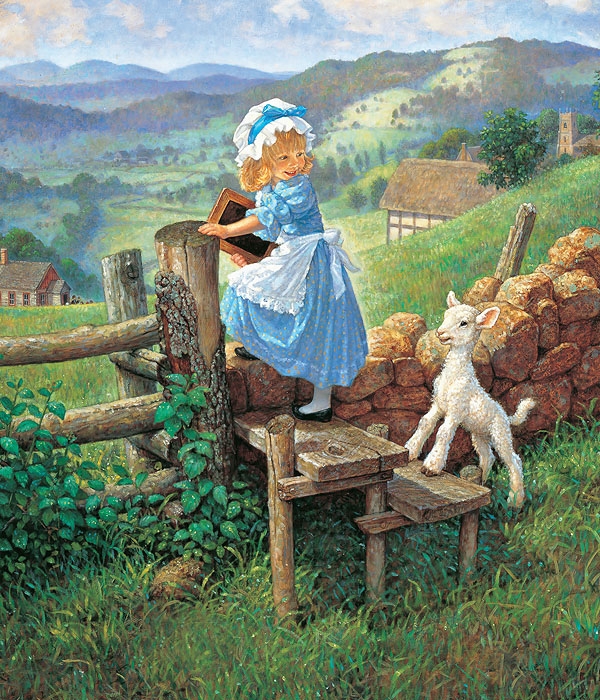
Nursery rhymes, too, fit easily within this genre of childhood fare teeming with eternal truth.
Mary indeed “had a little lamb whose fleece was white as snow.” And in the great condescension of God, “everywhere that Mary went the lamb was sure to go.”
Footnote 91, Our Divine Parents
The Disney Effect
Unfortunately, Disney has, in many cases, bastardized fairy tales by stripping them of their moral depth and replacing hard-won virtue with charm and appearance.
In their retelling of The Little Mermaid, for instance, the profound themes of sacrifice and unrequited love are replaced with a shallow narrative about following your heart to win a man. In the original story, the mermaid doesn’t get the prince. She gives up everything, endures agony in silence, and ultimately chooses mercy over vengeance. That is what makes her noble. But in Disney’s version, the princess is worthy because she’s beautiful, curious, and spunky — not because she suffers well or acts with selfless love. This shift reflects a deeper cultural loss: the idea that virtue must be cultivated has been replaced with the myth that worth is inherent in beauty and personal desire, regardless of cost or consequence.
In the Brothers Grimm telling of the Snow White tale, the princess is far more than a passive victim or a naive girl awaiting rescue. She demonstrated resourcefulness, humility, and the ability to adapt, even in exile. After fleeing from the queen’s murderous jealousy, she found the dwarfs’ cottage and quickly took initiative — bartering her skills in cooking, cleaning, and making herself useful in exchange for shelter. She earned her keep not through entitlement but through service and gratitude. When the queen returned in disguise, Snow White was repeatedly deceived by someone who appeared maternal and trustworthy, which speaks to the peril of corrupted femininity and false kindness, not gullibility.
Disney reduced the complexity of feminine heroines by portraying them as cheerful and sweet but mostly helpless. The result? A generation of girls who have come to believe that being good means being pretty and polite, rather than courageous, discerning, and willing to serve even in hardship.
And in the greatest irony of all, when juxtaposed against the original, recall that it was the wicked step-mother queen who was obsessed with appearance. We now have a generation of little girls who, because of Disneyfication, think that what it means to be a princess is to be beautiful and wear floofy dresses.
For little boys the corruption has been just as destructive. The hero’s journey has been lost entirely. Disney princes emote, apologize and stay out of the way.
The second wave of Disney bastardization was to invent new heroines and make them unnaturally adept in a man’s world. Mulan is a good example of this. Girl’s believe things that are contrary to their nature and boys believe themselves to be unnecessary and irrelevant.


Setting Expectations - Foundations of Morality
I grew up on fairy tales. And they gave me some expectation that happily ever after was possible. Additionally, my parents set the standard for a committed, loving, happy marriage. They constantly reiterated that I was, indeed, a literal princess being a daughter of God and a member of the church. They treated me like a princess and expected that I would make choices that reflected this intrinsic worth.
My husband teases me that I expect Camelot. Yes, I have high expectations. But I believe that we are capable of it. And he loves me with a fierceness and dedication that proves that my early expectations were not misguided.
“If children are to be brought up in the way they should go, to be good citizens here and happy hereafter, they must be taught. It is idle to suppose that children will grow up good, while surrounded with wickedness, without cultivation.”
Discourses of the Prophet Joseph Smith, p. 273
William Wordsworth penned one of the most famous reflections on pre-mortal existence and the divine nature of childhood:
“Our birth is but a sleep and a forgetting:
The Soul that rises with us, our life’s Star,
Hath had elsewhere its setting,
And cometh from afar:
Not in entire forgetfulness,
And not in utter nakedness,
But trailing clouds of glory do we come
From God, who is our home:
Heaven lies about us in our infancy!
Shades of the prison-house begin to close
Upon the growing Boy,
But he beholds the light, and whence it flows,
He sees it in his joy;
The Youth, who daily farther from the east
Must travel, still is Nature’s priest,
And by the vision splendid
Is on his way attended;
At length the Man perceives it die away,
And fade into the light of common day.”
Little children retain a connection to their higher selves, which is born intact. God knows what we, as adults, have forgotten.
Truly I say unto you, except you are converted and become as little children, you shall not enter into the kingdom of Heaven.
Esoteric knowledge remains hidden because most people are asleep to it’s perception. When the deeper parts of the soul awaken, esoteric knowledge is seen, or rather, rediscovered; it is then that it becomes possible to decipher and to pass on understanding.
Time to Grow up
We have perhaps each encountered the familiar and sobering command to “grow up,” a phrase that—though often well intentioned—masks a deeper and more tragic expectation: the surrender of childlike wonder and the quiet perspective it guards.
When Wendy Darling is told she must leave the nursery behind, what is really being demanded is the forsaking of Neverland—a place where imagination breathes life into stars and shadows, and where memory still holds hands with heaven. What adults often dismiss as childish fancy is, in truth, a vision of eternity—a way of seeing through the veil, recognizing spiritual realities wrapped in symbol and play. To grow up, in the way the world demands, is often to go blind to wonder. We may continue soberly on, but will miss signs, wonders and even miracles.
Fairy tales are replaced with history books. King Henry the Eighth killed his wives, rather than love the one wife of his youth.
You cannot learn goodness by making a study of evil. It gets on you and stains your soul.
“Vice is a Monster…” – Alexander Pope
From An Essay on Man (1734)
“Vice is a monster of so frightful mien,
As to be hated needs but to be seen;
Yet seen too oft, familiar with her face,
We first endure, then pity, then embrace.”
There is a Native American Parable that reiterates this principle.
Native American Parable Two Wolves
One evening, an elderly Cherokee brave told his grandson about a battle that goes on inside people.
“My dear one, the battle between two ‘wolves’ is inside us all. One is evil. It is anger, envy, jealousy, sorrow, regret, greed, arrogance, self-pity, guilt, resentment, inferiority, lies, false pride, superiority and ego.
The other is good. It is: joy, peace, love, hope, serenity, humility, kindness, benevolence, empathy, generosity, truth, compassion and faith.”
The grandson thought about it for a moment and then asked his grandfather: “Which wolf wins?”
The old Cherokee replied, “The one you feed.”
Which promptings will we choose to act upon. In which direction will we choose to focus? Natural man or saint?

Fairy God Mother
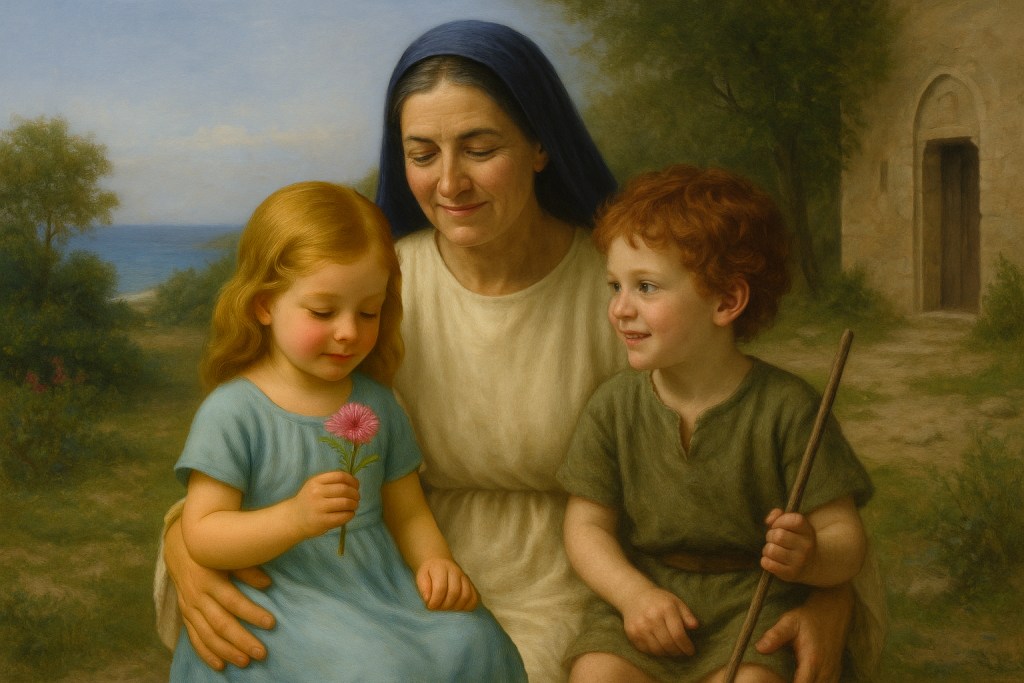
Consider that fairy god mothers are archetypes of our own grandmothers. They are a loving and an interested part of of our extended family. And recognizing the possibility that we were endowed with Fairy Tales by our own dear God Mother, perhaps we should give them more attention than is currently deigned. I mean, if you think about it, maybe the truth of the matter has been before our eyes all along.
But what does this idea of “fairy” have to do with Her? I tend to believe that the archetype of the fairy is so that we can understand the role of our own beloved ancestors who have passed on and have a vested interest in our success.
The people of China and Japan both observe Ancestor Veneration. I think generations of apostasy have confused a mere recognition of their influence with undue, worshipful attention. Yet there is a profound understanding that has been preserved in their tradition: we have access to those who have passed on more than we realize. The archetype of “Fairy” might be for our own ancestors who watch over us and at times are at liberty to intervene on our behalf.
There is a very good series on exactly this premise with true, real-life examples of angelic intervention during critical moments: Angels in Disguise. Another true story example of angels protecting their family in the face of object evil was turned into a full length movie called The Cokeville Miracle.
Government of God
The government of God is reflected in Fairy tales. King are fathers and Queens are mothers. Princesses are beautiful because they are good. Princes are worthy as they sacrifice, cleverly solve problems, and faithfully follow divine instruction, line upon line. A kingdom is your posterity and all who follow thereafter.
The family structure is divine in nature.
There is also an important reassurance in fairy tales for children who have been born into circumstances and with parents who do not live up to this standard.
You come from a higher place. These people are merely step parents. You have a real Mother who loves you desperately. Your Father is a King. And if you watch and listen carefully, They will lead you home.
Wolves and Witches
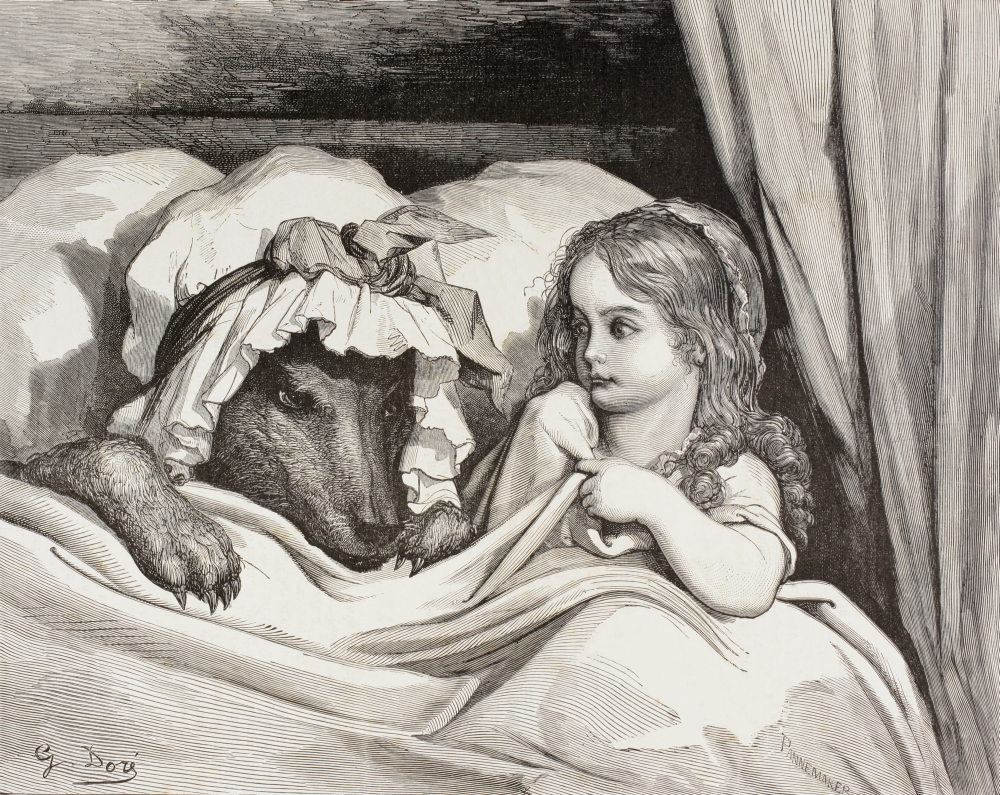
Dragons and ogres pose an obvious threat. However, when a witch wants to deceive children or a young princess she disguises herself as an old woman. Why? Because the superficial presumption is that an old woman is frail and weak and poses no threat. However, as I’ve discussed previously about the nature of predatory women, the threat actually increases when not properly measured.
Witches disguised as a “harmless old woman” and wolves disguised as grandmothers might actually want to eat your children instead.
Below are a few familiar tales and perhaps some you haven’t heard before:
The Witch, Yellow Fairy Book
Little Red Riding Hood, Blue Fairy Book
The True History of Little Goldenhood – The Red Fairy Book
Hansel & Gretel, Blue Fairy Book
Snowdrop, Red Fairy Book
The Witch and Her Servants, Yellow Fairy Book
Step mothers are merely cruel and show favoritism to their own ugly daughters, but old women who are not our own grandmothers might be witches who would devour and murder us.
There’s a saying in the South, particularly in older generations and rural communities:
Pretty is as pretty does.
Actions speak louder than words and who we are is found out entirely by our behavior. With that introduction, I’d like to share another fable, one you may have heard before, modified from the original.
Aesop's Fables - modified
Once upon a time a young girl was trudging along a mountain path, trying to reach her grandmother’s house. It was bitter cold and the wind cut like a knife. When she was within sight of her destination, she heard a rustle at her feet.
Looking down, she saw a snake. Before she could move, the snake spoke to her.
He said: “I am about to die. It is too cold for me up here and I am freezing. There is no food in these mountains and I am starving. Please put me under your coat and take me with you.”
“No,” replied the girl. “I know your kind. You are a rattlesnake. If I pick you up, you will bite me and your bite is poisonous.”
“No, no,” said the snake. “If you help me, you will be my best friend. I will treat you differently.”
The little girl sat down on a rock for a moment to rest and think things over. She looked at the beautiful markings on the snake and had to admit that it was the most beautiful snake she had ever seen.
Suddenly, she said: “I believe you. I will save you. All living things deserve to be treated with kindness.”
The little girl reached over, put the snake gently under her coat and proceeded toward her grandmother’s house. Within a moment, she felt a sharp pain in her side. The snake had bitten her.
“How could you do this to me?” she cried. “You promised that you would not bite me if I would protect you from the bitter cold.”
The snake hissed: “You knew what I was when you picked me up” and slithered away.

Inconceivable!
Now you may be thinking it is sacrilegious to lay fairy tales next to scripture. I’d like to make my case by sharing the following parable that was given by our Lord in 2018 (T&C 176) .
A master called his servants and told them, I send you to a far off land where there is no stone, and command you to there build me a house. When you are done, send me word and I will come there to dwell. All his servants were faithful to their master and obeyed.
Some reasoned among themselves that their master dwelt in a stone house, and because this far off land had no stone, they ought gather and take stone with them. Others reasoned among themselves that because the master said there was no stone, there must be trees, and therefore brought axes and tools to build a wooden house. And yet others reasoned among themselves that they should go and see the place their master had chosen, not knowing beforehand what would be there.
The first group gathered stones as they traveled, with great difficulty in their chosen labor. The second group went with haste to the place, but found no trees with which to build a wooden house, and their tools were of no use. Their plans having failed, they remembered their fellow servants who gathered stones for a stone house and returned to join their labor. Returning, they met the group planning only to go to the place and do as their master commanded. Those returning said, We have seen the place. There is no stone and no trees there with which to build a house. We return to help gather stones. Come with us. Those going replied, Not so. We will see for ourselves the place the master has chosen and then obey his command. Those returning said, You are foolish, for the master said: There is no stone there, and therefore must want us to bring stone.
The servants departed, one to see the site chosen by the master, and the other to join those gathering stone. When the servants arrived at the site, they too saw there was no stone for a stone house, neither was there wood for a wooden house. They pondered why their master should choose such a place for his house. Looking about they saw the place was high and lifted up, as if the whole world could be seen from the wondrous place. An approaching enemy could be spied from a long distance. They said, Surely the master has chosen a place of safety, peace, and beauty. Our master was wise in choosing this spot. He must also have been wise in commanding we build here his house. What are we to do? Ought we also labor to bring the distant stone?
But among these servants, some began to prepare the ground, clearing a place to build the house. As they moved away the grass and brush, they found there was clay suitable to make bricks with which to build a house. They told their companions, See, there is clay here. Let us make bricks and build the master a house from what we have found here on his chosen spot. And so they made bricks — laboring, digging, shaping, and drying. These servants reasoned among themselves that the labor would be better done if their fellow servants joined them. They sent messengers to those laboring to bring stone.
The messengers told their weary, fellow servants — now moving a great mound of rock — that while they were still distant from the place chosen by their master, work on his house had begun. They said, Come now quickly with us, for we have found clay to make bricks at the place the master has chosen, and with you we can accomplish what the master commanded. Many were willing, and some were offended, and some wanted to stop all effort, and return to their master and tell him his command was too great. They argued among themselves, and for a moment forgot their master’s command, and forgot those who were laboring to make bricks from clay at the place the master had chosen.
After a season of quarreling and disputing, some said, We have neglected our master’s command long enough. We go to help make bricks of clay to build our master’s house at the place he has commanded. Seeing some depart, those who remained called for all to reason together because the labor was hard and the loss of even a few made moving stones even more difficult. Soon, many others went to join in making bricks. A few others returned to complain to the master. Another few continued to move the stones with little hope to complete their labor to build their master a stone house such as he had before.
When the house of brick was complete, all the servants returned to tell their master as they were commanded. Returning, they came upon the place where those few remained faithfully moving stone. Many had compassion on their fellow servants and began a new labor with them. A messenger was sent to tell the master his house was finished. Those who had compassion said, The master’s house is finished. What need is there for further labor to carry stone for the house? Let us not waste the effort of our fellow servants who have labored hardest, and we will put the stones to good use.
Hearing the work was complete, the master, with his household, departed for the new house. On the way, they found the pathway improved by stones laid to pave the way. The master was pleased, and said, I asked you build a house at the spot I had chosen, and this you have now faithfully done. But you have also made a stone road in place of the old pathway to a place where there is no stone to use. Well done my faithful servants, for all of you have labored to do as I have commanded, and proven your faithfulness. I will accept the house and the road, that none of your labor be lost.
Now briefly recall the story of the Three Little Pigs. The three brothers built homes of straw, sticks, and bricks. All of the building materials from the fairy tale are found in the Lord’s parable. Grass and brush (straw) was cleared from the land, and not considered in the least as a sufficient building material.
Wood (sticks) was not available on the site the Master chose, but this is the material that our own modern homes are built from. We have the tools to build those kinds of homes, but according to the fairy tale, homes made of sticks are still not sufficient to keep out the wolves.
The bricks were made from material readily available on the spot the Master had chosen. Those familiar with the fairy tale have woven into their imagination that brick is actually the best option.
We also know from fairy tales that the castle of the king is built of great stone. But we don’t have the strength to carry the stone and build His house here. Maybe that house will arrive with Enoch when his city returns.
The accepted Statement of Principles was created out of material already available, like the clay for the bricks in the parable.
There will yet be records restored from all the tribes, that will be gathered again into one, and also as I have said, there is some truth in the Apocrypha, including the Pseudepigrapha and scrolls recovered at Nag Hammadi, and other New Testament texts uncovered since the time of Joseph Smith, and findings at Qumran, and there are other records yet to be recovered; and whoso is enlightened by the spirit shall obtain benefit by their careful study.
Like any record that has gone through generations of time, fairy tales should still be measured against the most reliable standard of the restored scriptures.
Can you think of another genre that so readily demonstrates the goodness of kings, the righteousness of heroes, courageous faith, supernatural power, and the perfection in the world as it ought to be?
Fairy Tale Collection
Andrew Lang is best known for books he did not write – the 12 collected works known as Andrew Lang’s Coloured Fairy Books.
The Original Fairy Books were put together by his wife at the end of the 19th century. Although he is credited as being the author, Andrew Lang was technically the editor of these books. His wife Leonora “Nora” Blanche Alleyne was largely responsible for the selecting and translating the classic stories from around the world. Andrew acknowledged his wife’s contribution in his preface to The Lilac Fairy Book (1910), where he wrote, “The fairy books have been almost wholly the work of Mrs. Lang, who has translated and adapted them from the French, German, Portuguese, Italian, Spanish, Catalan, and other languages.”

English fairy tales were very rare at the time of their publication – only a few collections existed – and so the Lang fairy books were very influential. Not only did these collections mark the first time many of the stories had appeared in English, but they also contributed to an enormous increase in the popularity of fairy tales forming part of children’s literature.
The 12 books in the series were originally illustrated by Henry Justice Ford, with credit for the first two volumes shared by G. P. Jacomb-Hood and Lancelot Speed. Due to the nature of printing in the late 1800’s all of the illustrations were done in black and white.
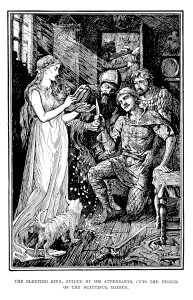
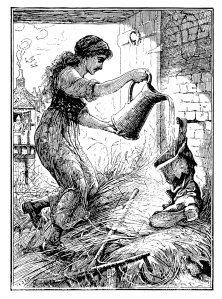
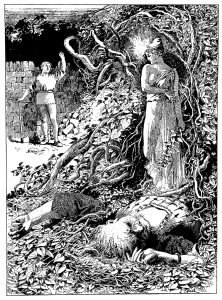
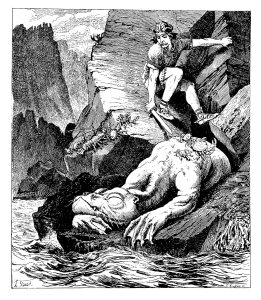

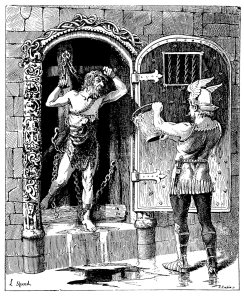


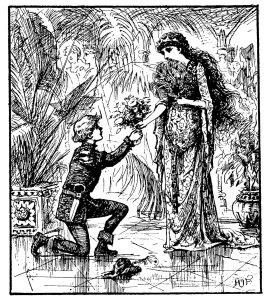


All of the Fairy Tales are now available in the public domain for free. Links to each book is included below. The only downside to the online copies is that they don’t include any of the illustrations.
Project Guetenburg - Online Free
Because the copyright has expired there have been no shortage of people trying to take advantage of the records and profit. There are many who simply re-print the pages on demand without taking the time to do the editorial and copy work required for a quality book.
If you would like to have physical copies for your own library I have found several high quality options that are readily available. Each has it’s advantages and disadvantages. I will try to lay out the facts for each.
Softcover Options
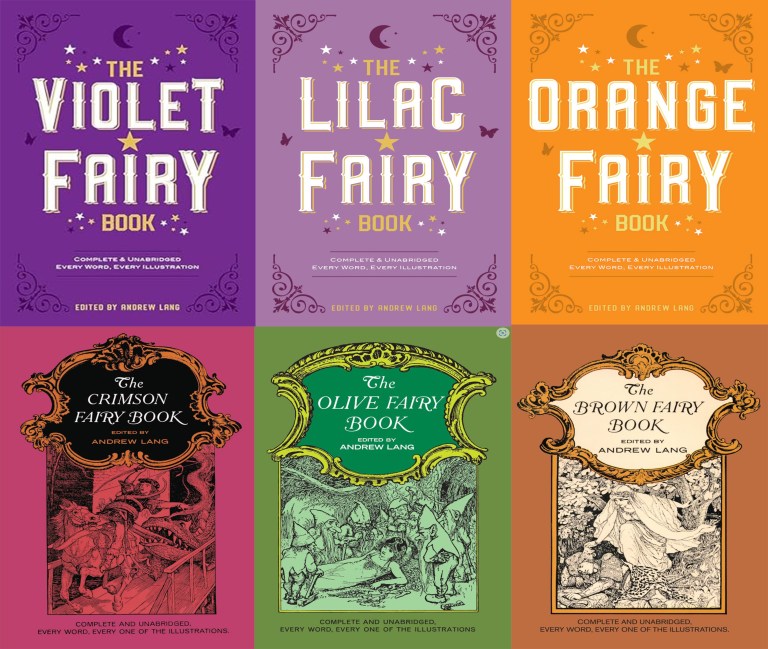
Dover has been the standard for excellence in the children’s classics. There was a complete set of the colored fairy books published in the 1960s including the original black and white illustrations. Matching vintage copies are still available at used bookstores like AbeBooks or on Ebay.
Dover updated the covers for eight of the twelve fairy books. The new cover artwork has been reduced to a plain colored page with text. The Grey, Crimson, Olive, & Brown Fairy books are all still available new with the 1960’s cover design. A new and complete Dover set will unfortunately have mismatched covers.
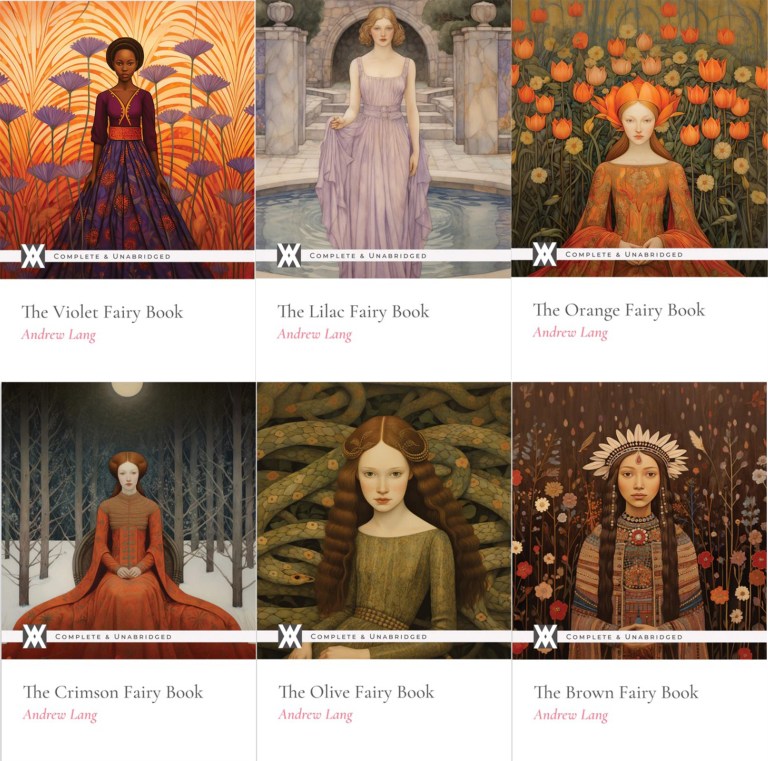
New West Press has a complete collection of the fairy tales with matching covers. They took the liberty to colorize some of the original black and white artwork, but otherwise the books are complete and unabridged.
Paperback copies are about $12-18 per book.


Hardcover
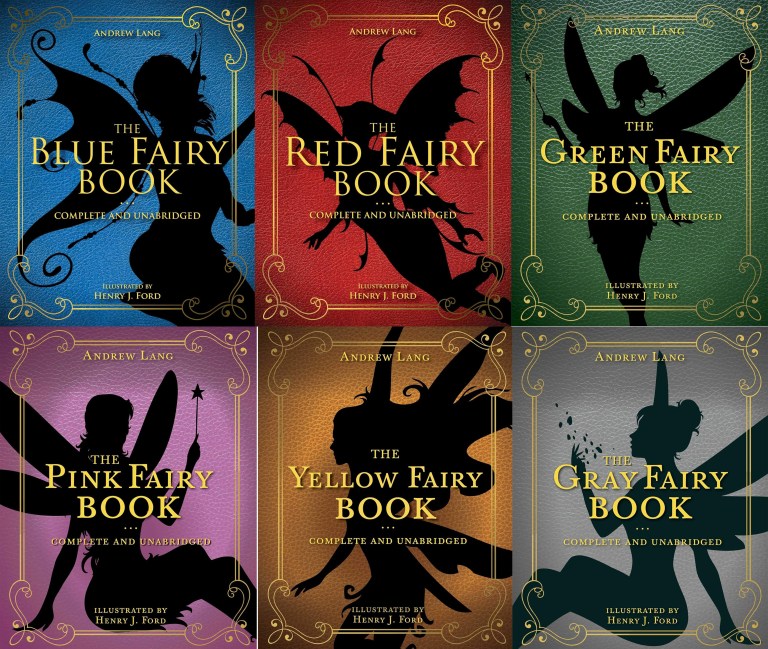
Racehorse for Young Readers, a division of Simon and Schuester printed half of the original collection. The Violet, Lilac, Olive, Crimson, Orange and Brown Fairy books are not available in this set. You will recognize this set of books by the provocative fairies on the front, presumably modeled after Disney’s 1953 “Pin Up” Tinkerbell. They also took the liberty to discard the original artwork and make new full color art instead. These are about $20 per copy.
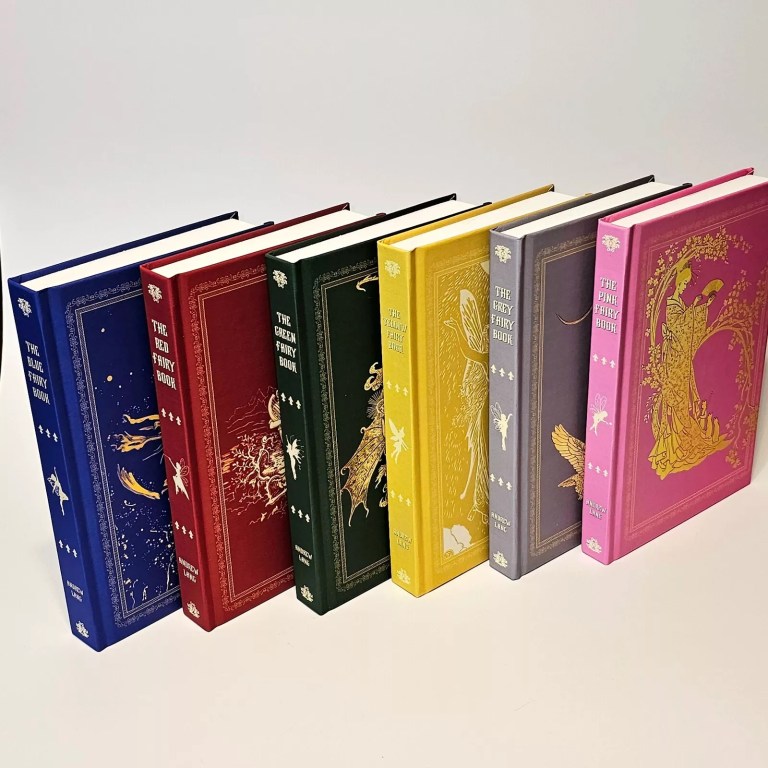
An independent publisher called Based Books recreated copies of Andrew Lang’s complete original set of fairy tale books, modeling even the cover artwork from the first editions. These are about $40 per copy on Amazon.

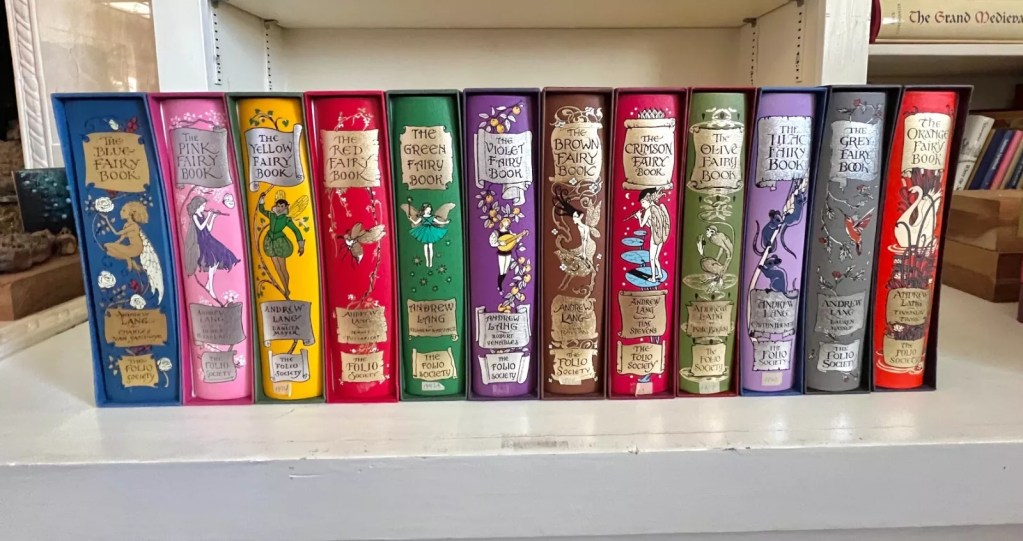
The Folio Society created a full set of the Andrew Lang colored fairy books between 2003 and 2014, but the collection has since been discontinued. Even when they were new they were expensive, $65 per copy in 2013. Now a full set can range anywhere from $3700 on Ebay to $5800 on AbeBooks, which is as much as the 1889 first edition set goes for, if you can find it. This is not a realistic option, but it highlights the tremendous value that people place on the classical fairy tales.
SIGNATURE
Signature is an acronym I’ve invented that stands for:
Study In Goodness, Nature, Archetypes, & Truth;
Unveiling Righteousness & Eternity
“Although the Lord has provided everything necessary to accomplish that project, we do not have suitable candidates….”
We do not need anything else provided other than to knock off the rough edges and polish ourselves up. What we are made of matters.
Because He’s not asking lead to do what He knows only iron can accomplish.
So how are we to learn what suitable candidates look like so we can emulate them? That just might be available already in the childhood standard of perfection.
As we read Fairy Tales to our children we may regain some of that childlike perspective, and confidence in the miraculous that we need in order to lay the foundations of Zion.
The Mother has a pattern of signing her particular works of art. Have you ever looked at a placenta and recognized in it the Tree of Life?
So I’d like to propose opening a conversation and share our insights with one another as we read fairy tales together. I’m calling this project SIGNATURE: Study In Goodness, Nature, Archetypes, & Truth. Unveiling Righteousness & Eternity. This is a new tag that I will be using to invite discussion.
I’ve posted a fairy tale on my website to open the discussion with submission boxes for each section of the story. Like many of the other building blocks of my website, it’s backdated so not to trigger the rss feed.
You are all invited to join and contribute. You may draw from scripture, other religious traditions, or personal experience. You can submit anonymously, or have attribution. However you prefer. If you think something is obvious, it might not be so for others. Please share your thoughts.
I’m starting off with the Twelve Dancing Princesses for the obvious parallel to the Twelve Tribes of Israel.
We only have two choices: either to learn by precept or through sad experience. If we learn by precept, then we listen and follow the Lord. But, when we reject the Lord’s counsel and ignore His warning, then we learn through sad experiences.
We can choose to be proactive in our weight training by going to the gym on a regular basis. Or through our inaction and isolation sit around waiting instead for crisis strength training.
Either way, God will have a prepared people.


Perspective matters. And much like the story Triangularity from the Ten Parables, we ought to consider that there is more depth to familiar symbols than is obvious from our flat two dimensional vantage point.