1 Principles of godliness (taken from LoF)
1.1 Knowledge
1.2 Principle of faith – Principle of power – Principle of action
(Should these be separate?)
1.3 Justice
1.4 Judgement
1.5 Principle of Mercy
1.6 Truth
2 Principles of righteousness
2.1 Love – Charity
2.2 Principle of Intelligence
2.3 Principle of daily effort and on-going devotion
2.4 Principle of decision making
2.5 Principle of asking and receiving (ask, seek, knock)
2.6 Principle of revelation
2..7 Forgiveness
3 Principles of the gospel
3.1 Obedience
3.2 Principle of sacrifice
3.3 Chastity
3.4 Consecration
3.5 Resurrection
3.6 Becoming Gods
3.7 Walking the same path that our Lord walked
4 Principles of the doctrine of Christ
4.1 Testimony of the Father
4.2 Testimony of the Son
4.3 Testimony of the Holy Ghost
4.4 Repentance
4.5 Baptism
4.6 Salvation
4.7 Inheritance
Behold, verily, verily I say unto you, I will declare unto you my doctrine. And this is my doctrine, and it is the doctrine which the Father hath given unto me — and I bear record of the Father, and the Father beareth record of me, and the holy ghost beareth record of the Father and me — and I bear record that the Father commandeth all men everywhere to repent and believe in me. And whoso believeth in me, and is baptized, the same shall be saved, and they are they who shall inherit the kingdom of God. And whoso believeth not in me, and is not baptized, shall be damned. Verily, verily I say unto you that this is my doctrine, and I bear record of it from the Father. And whoso believeth in me believeth in the Father also, and unto him will the Father bear record of me, for he will visit him with fire and with the holy ghost (3 Nephi 5:9)
5 Principles of exaltation
5.1 Principle of opposition
5.2 Progression
6 Principles of this society
6.1 Principle of “other sheep”
6.2 Equality
6.3 Marriage
6.4 Family
6.5 Principle of Tithing
6.6 Stewardship
6.7 Common Consent
6.8 Principle of Christian healing
6.9 Worship
6.10 Peace
6.11 Order
7 Principles of freedom
7.1 Written Constitution
In early American life, the colonies were ruled by a government that was 3,800 miles away. A round-trip journey from New York City to London could take 10 to 14 weeks. Britain cared more about their self-interests and not the interest of the colonists. They were taxed without any representation in the Parliament. They were forced to house the British army, and their goods could be seized. The Constitution was written to limit the power of the federal government and protect the rights of the people. It illustrates a government that is a step up from tyranny and dictatorship and was a novel concept for its time. It didn’t come without controversy, and it had to be defended and carefully maintained until its concepts became widely accepted and adhered to.
Most of us covenant Christians come from the LDS church, where a strong hierarchical system was foundational. The leaders in Salt Lake City made decisions based on their self-interest and public opinion versus the good of the people. Our tithing money was used to enrich the church leaders while widows and the poor went without. Our movement is unique in that we do not have a centralized organization or top- down hierarchy. We have no 501c3, buildings, or legal framework. We are group of believers who meet in each other’s homes and parks. We gather tithes and can disperse them within our own fellowships directly to the individuals who need them. Our new culture is a step up from the organized religion model that we left.
The Constitution was based on holy principles that also can be found in the covenant of Christ. Look at Mosiah 13. In this chapter, King Mosiah is near the end of his life and explains to the people that he wishes them to move to a system of judges. A king is great if he is righteous and as bad as if he is sinful. A sinful king causes his people to sin, and a righteous king takes on the sins and iniquities of his people. This is an inequality in their system. The system of judges Mosiah introduces allows the people to be responsible for their own sins. In Alma chapter 1, you see that this new system has to be protected and maintained from corruption. Nehor, in year 1, introduces priest-craft and murders a righteous man. In year 5, Amlici tries to install himself as king so he could destroy the congregation. False beliefs and spirits eventually work their way into the congregation, and the congregation is destroyed. What we learn is that when we are faced with those false beliefs and spirits, we must stand up and reject them. We can do it kindly without the spirit of contention, but we must reject it or our movement will also face eventual destruction. [source]
7.2 Popular sovereignty
The US Constitution ratified in 1788 is grounded in several core principles that reflect the Enlightenment ideals and practical concerns of the founding fathers. Popular sovereignty is one of these core principles. Popular sovereignty is the idea that the government derives its authority from the consent of the governed. The preamble opening to the Constitution, “We the People,” underscores that the legitimacy comes from the people, not a monarch or an elite group. This ensures that the people have the right to establish and alter their government through mechanisms like voting, referendums, or constitutional conventions.
Elected officials act as agents of the people’s will, accountable through democratic processes like elections. You can see that the founders greatly valued this principle because “We the People” are the three largest words in the document. This principle applies to priesthood certificates in that the man derives his authority to perform ordinances for his community through the authorization of seven women of his community. We learn from Mosiah: Now, it’s not common for the majority of the people to want anything contrary to what is right, but it’s common for the minority to want what isn’t right. So you must observe this principle and make it your law to do your business by the majority vote of the people. And if the time comes that the majority of the people choose iniquity, then that is when God’s judgments will fall upon you, and he’ll cause great destruction, just like he’s done upon this land up until now. [source]
7.3 Limited Government
Limited government is a core principle of the Constitution that restricts governmental power primarily by protecting individual rights and liberties. It is necessary to restrict the government to prevent tyranny. The Constitution defines specific powers for the federal government, with all other powers reserved to the states or the people.
This ensures the government is restrained from overreaching into the personal freedoms and private affairs of its people, leaving individuals free to pursue their lives without undue interference. James Madison said, “If men were angels, no government would be necessary. If angels were to govern men, neither external nor internal controls on government would be necessary.” In framing a government which is to be administered by men over men, the great difficulty lies in this: You must first enable the government to control the governed, and, in the next place, oblige it to control itself.
Now, in Alma, we can clearly see where there was a man trying to be a tyrant and overthrowing the established judges. It is the fifth year of the reign of the judges, and Amlici comes on stage. He’s a man practicing priest-craft and is described to be cunning. Amlici draws men away from the congregation, and he becomes quite powerful. Then he tries to establish himself as king. Now, this alarmed the congregation and everyone not persuaded by Amlici’s arguments, because they realized that according to their law, such things were established by the voice of the people.
Consequently, if Amlici, an evil man, received enough support, he could deprive them of their right to worship as a congregation because he intended to destroy God’s congregation.
In the Christian Covenant movement, we have no centralized authority. Instead, we have small autonomous fellowships. There is no central leader who can impose control on the group and corrupt it from the top down. Corruption would have to take place in every fellowship. This naturally protects the rights and liberties of each person and fellowship. [source]
7.4 Checks & balances
Each branch can limit the powers of the others, ensuring no single branch dominates. For example, Congress can override a presidential veto. The president appoints judges subject to Senate approval, and the judiciary can declare laws unconstitutional.
This principle is clearly illustrated in Mosiah: “And now, if you have judges, and they do not judge according to the law which has been given, ye can cause that they may be judged of a higher judge. If your higher judges do not judge righteous judgments, ye shall cause that a smaller number of your lower judges should be gathered together, and they shall judge the higher judges according to the voice of the people.” In our movement, this principle of checks and balances is applied to women’s councils, where women in the community can judge righteously if men with priesthood certificates have transgressed God’s laws or changed the ordinances. [source]
7.5 Individual Rights
The Constitution, particularly through the Bill of Rights, protects individual liberties such as freedom of speech, religion, and the press, and safeguards against abuses like unreasonable searches. These protections reflect the Founders’ concern with preserving personal freedom. Mosiah: “And now I desire that this inequality should be no more in this land, especially among this my people. But I desire that this land be a land of liberty, and every man may enjoy his rights and privileges alike.”
Everyone in our Christian covenant movement has the freedom of assembly. They can meet together and organize their fellowships, meetings, and conferences under whatever basis and structure they like. [source]
7.6 Rule of Law
Rule of law is defined as no one is above the law, and the Constitution serves as the supreme legal framework. This principle ensures that government officials and citizens alike are accountable to the same legal standards. [source]
7.7 Separation of Powers
Separation of powers is the principle that divides government authority among three branches to prevent any one group from becoming too powerful. Each branch has distinct roles, such as the legislative branch creating laws, the executive branch enforcing laws, and the judiciary interpreting laws. [source]
7.8 Federalism
Federalism is a mode of government that divides power between the general government and regional local governments, such as the federal government and the states. The Constitution delegates certain powers to the federal government, like regulating interstate commerce, national defense, and managing the mail and currency. While states retain significant autonomy over local matters, conducting elections, public schools, and regulating commerce within the state. The goals of this system of government are to allow for regional autonomy and different approaches to policy.
Regional autonomy allows for decision-making at a local level and allows governments to be more responsive to the specific needs of their citizens. Different approaches to policy, or “laboratories of democracy”, allow states to experiment with different policies, for innovation and the development of new approaches to governance.
Federalism is not specifically exemplified in the covenant of Christ. The government structure the Nephites used during the time of judges does have higher judges and lower judges. Local authorities do handle local affairs while reporting to the chief judge. The judges are elected by the voice of the people. However, what has been recorded does not mention any constitutional framework defining the powers of the general government and the regional local government.
The Lamanites also operate in a loose federalism style. Their system has a main king, with local kings managing and controlling their city-states. Federalism isn’t an exact model for our government either. Our movement is a decentralized movement with a network of autonomous fellowships. We have no formal hierarchy, no rigid rules, and no prescribed offices. Our fellowships are organized locally or online with whatever structure or basis the people want. Since we have no 501c3, building, or legal framework, we have no need for a strong central leadership to oversee those things. Our local fellowships can collect tithes and disperse them straight to those in need.
This model also allows for experimentation. Some fellowships operate under common consent. Some allow for meetings to be organized by the whims of the organizer, and some fellowships are completely online. Now, we do have general conferences where the entire assembly is invited, but those are organized and paid for by small groups of people or fellowships. They are not organized by a central committee, nor paid for by a general fund. [source]
7.9 Honoring Agency
7.10 Unalienable rights
7.10.1 Life (future)
7.10.2 Liberty (present)
7.10.3 Property (past)
7.11 Free Market Economy
7.12 Democratic Republic
7.12.1 Will of the majority
7.12.2 Rights of the minority
7.13 Education
7.14 Debt = slavery …I don’t know quite how to phrase this.
7.15 Equality of Governance
Each of us individually stand in judgment before our God, accountable for our own sins and no one else’s. That is what Mosiah 13 teaches and what T&C 101:17 teaches. The principle of Equality of Governance was introduced to us in Denver’s 10th talk. Even though it is not a constitutional principle, I would argue that it may be the most important principle of freedom. It is the principle that says there are no offices amongst us. All are equal, even the women.
8 Principles of the law of the Celestial Kingdom
8.1 Translation
8.2 Creation
9 Principles of law and humanity
9.1 Alignment
9.2 Forecasting
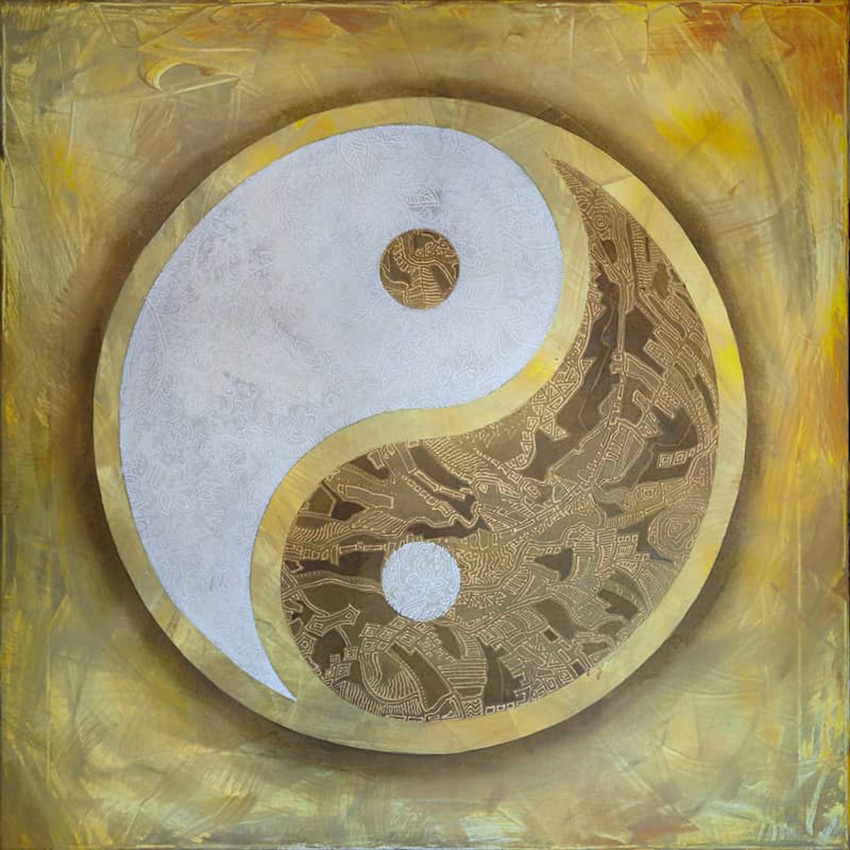
9.3 Duality (as above, so below)
9.5 Magnetization
9.6 Supposition
9.7 Substance
9.8 Nothingness (zero point)
9.9 Entropy
9.10 Harmony
9.11 Expectation
10 Principles of the oracles of God
10.1 Principle of polygamy posterity?
10.2 Holy Order
10.3 Principle of Biblical Hermeneutics
10.4 Principle of the keys of the kingdom
11 Principles of astronomy
11.1 Signs
11.2 Seasons
11.3 Heavenly Bodies
11.4 Constellations
11.5 Balance




















 Mind blown!! Its because the posterity born to these women would have Joseph as their Holy Order patriarch. Building the family of God. Men were sealed to him as adopted sons…law of adoption, right? Daughters are the ones bearing children. They are the portal through which new life and posterity come. But I digress….